OpenAI Secures Landmark US Government AI Access and Cyber Defense Deal
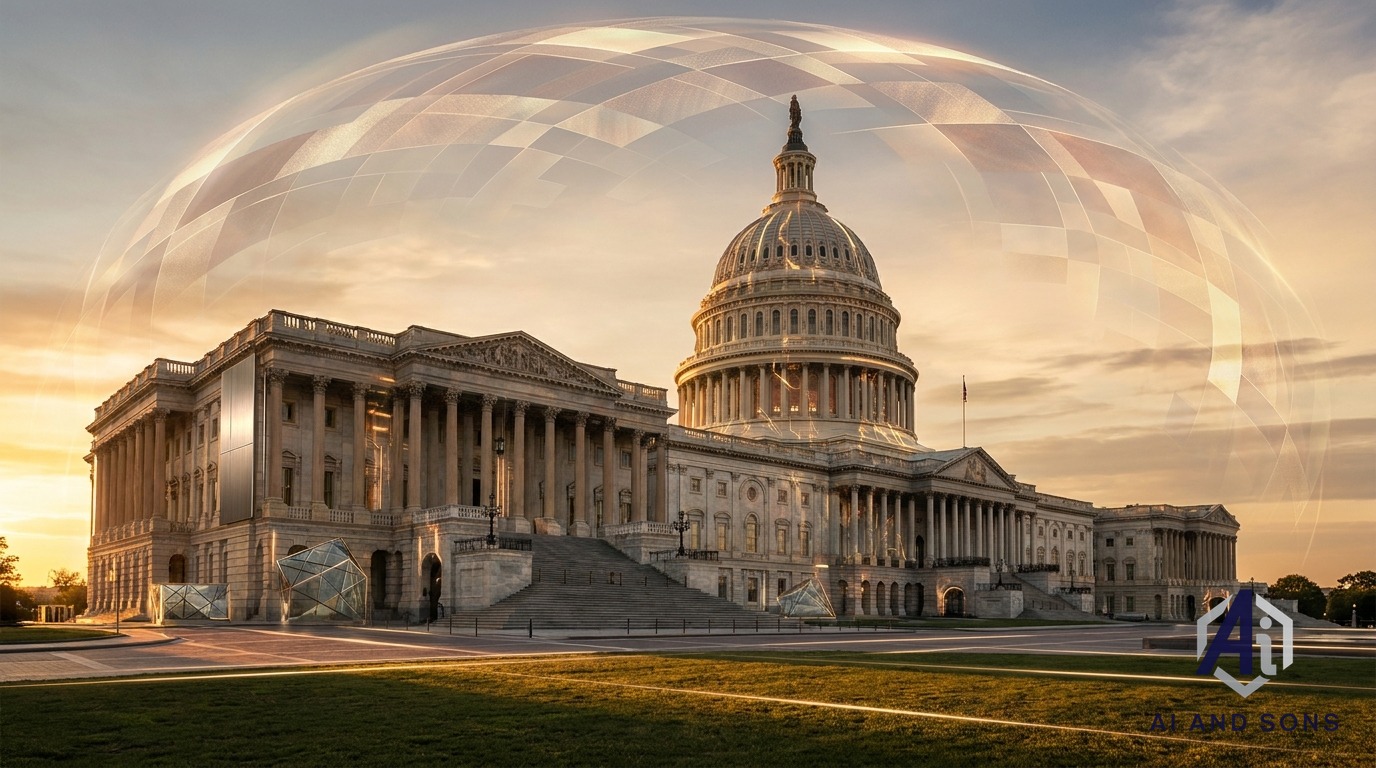
OpenAI and the U.S. General Services Administration (GSA) have inked a multi-year deal providing government entities free AI access and robust cyber defense capabilities.
Listen to the story
Ai and Sons Daily Brief
OpenAI and the U.S. General Services Administration have signed a multi-year agreement providing federal, state, local, and tribal governments with free access to OpenAI's AI tools, usage discounts, and enhanced cyber defense support. This landmark deal accelerates public sector digital transformation, expands the AI market, and highlights AI's critical role in national security. Businesses face new opportunities in government supply chains and standardization, but must also address ethical AI governance, cybersecurity vulnerabilities, regulatory complexity, and talent gaps.
Read the transcript
Maya: Welcome to the A.I. and Sons Daily Brief. I'm Maya, and joining me today is our lead analyst, Theo, to discuss a significant development in the world of artificial intelligence. Theo, what's making headlines?
Theo: Thanks, Maya. The big news is a landmark agreement between OpenAI and the U.S. General Services Administration, or GSA. This groundbreaking multi-year deal, announced on September tenth, two thousand twenty-six, is set to redefine how federal, state, local, and tribal government entities access and utilize advanced AI tools.
Maya: That sounds substantial. Can you elaborate on what this agreement actually entails for these government entities?
Theo: Certainly. Starting October first, two thousand twenty-six, and running for twenty-seven months until December thirty-first, two thousand twenty-eight, the deal provides free access to OpenAI's AI tools, waiving the usual fifteen-dollar per user per month license fee. Additionally, participating government entities will receive a substantial fifty percent discount on AI usage costs. A key provision also emphasizes enhanced cyber defense support, offering tailored guidance, onboarding assistance, and an expanded Government Academy for public-sector cyber defenders.
Maya: So, free access and discounts for governments, plus cyber defense. What are the broader implications of this partnership for businesses, especially those in the tech sector or those serving government contractors?
Theo: For businesses, this agreement signals a substantial expansion of the AI market into the public sector. Governments, traditionally slower tech adopters, are now equipped with direct, cost-effective access to advanced AI, which will inevitably accelerate their digital transformation. This also elevates cybersecurity, as governments gain enhanced AI tools to defend against sophisticated threats. It underscores AI's critical role in national security and critical infrastructure protection, prompting all organizations, particularly in sensitive sectors like healthcare, finance, and manufacturing, to re-evaluate their own AI-powered security.
Maya: That makes sense. It sounds like a significant shift. What specific opportunities might this create for businesses, and what potential risks should they be mindful of?
Theo: There are clear opportunities. Businesses developing AI solutions or offering integration services may find new market segments within the public sector supply chain. As governments implement AI, they'll likely establish best practices and regulatory frameworks, and early engagement with these evolving standards can provide a competitive edge. We could also see innovation spillover from government investment benefiting the private sector. However, risks include ethical AI governance, such as data privacy, bias, and accountability, which businesses must prioritize. AI systems can also present new attack vectors, requiring robust security protocols. The evolving regulatory landscape around AI and the intensifying demand for AI talent, especially in security, are also challenges businesses need to address.
Maya: Fascinating insights, Theo. So, to recap for our listeners, the U.S. government is rapidly accelerating its AI adoption, driven significantly by cybersecurity needs. This creates new market opportunities but also demands careful attention to ethical deployment, security, and regulatory compliance.
Theo: Exactly, Maya. Understanding and proactively responding to these shifts is crucial for businesses aiming to leverage AI's benefits while mitigating its risks.
Maya: Thank you, Theo. That's all for today's A.I. and Sons Daily Brief. For more details on this landmark agreement and links to our sources, visit aiandsons.com. We'll be back tomorrow with more essential tech news.
2026-09-12, Washington D.C. – A groundbreaking agreement between OpenAI for Government and the U.S. General Services Administration (GSA) is set to redefine artificial intelligence adoption across federal, state, local, and tribal government entities. Announced on September 10, 2026, this multi-year partnership not only grants unprecedented access to OpenAI's advanced AI tools but also significantly bolsters public-sector cyber defense capabilities. For business owners, founders, and IT/security leaders, this development signals a pivotal shift in the AI landscape, underscoring the technology's increasing integration into critical national functions and expanding market opportunities.
What the Landmark OpenAI-GSA Agreement Entails
The newly unveiled agreement, described as a first of its kind, establishes a robust framework for government access to OpenAI's AI technologies. Commencing October 1, 2026, and running for 27 months until December 31, 2028, the deal includes several key provisions:
- Free AI Access: Federal, state, local, and tribal governments will receive free access to OpenAI's AI tools, waiving the standard $15 per user per month license fee.
- Usage Discounts: A substantial 50% discount on AI usage costs will be extended to all participating government entities.
- Enhanced Cyber Defense Support: The partnership places a strong emphasis on cybersecurity, offering expanded support specifically tailored for public-sector cyber defenders. This includes guidance, onboarding assistance, and an expanded Government Academy, though specific details of these mechanisms are still being elaborated.
This strategic alliance builds upon a prior federal offer from OpenAI, solidifying its commitment to supporting government operations with cutting-edge AI. While the specific AI models and tools are generally referred to as "the best AI tools available," the broad scope suggests a comprehensive suite of capabilities designed to meet diverse public sector needs.
Why This AI Government Partnership Matters for Businesses
The implications of the OpenAI-GSA agreement extend far beyond government offices, resonating deeply within the private sector. This deal is not merely a contract; it's a powerful indicator of the evolving role of AI in governance, national security, and economic development.
Accelerating Public Sector Digital Transformation
For businesses, this agreement signals a substantial expansion of the AI market into the public sector. Governments, traditionally slower adopters of new technologies, are now equipped with direct, cost-effective access to advanced AI. This will inevitably accelerate digital transformation across various government operations, from administrative efficiencies to complex data analysis. Businesses that understand this shift can better position themselves to serve government contractors or adapt their own strategies.
Elevating Cybersecurity with Advanced AI Capabilities
Technology leaders should pay close attention to the emphasis on cyber defense capabilities. As governments gain enhanced AI tools to defend against sophisticated threats, it underscores the critical and growing role of AI in national security and critical infrastructure protection. This development highlights the necessity for all organizations, especially those in sensitive sectors like healthcare, finance, and manufacturing, to re-evaluate their own cybersecurity postures and consider how AI can be leveraged for defense. Explore our AI consulting and implementation services to understand how your business can integrate robust AI-powered security solutions.
OpenAI's Strategic Market Position
For OpenAI, this agreement secures a long-term, high-profile client base, solidifying its position as a key AI provider for government entities. This could potentially influence broader industry standards for AI deployment and governance in sensitive environments, setting benchmarks for other AI providers vying for public sector contracts.
Opportunities and Risks for Business Leaders
The deep integration of AI into government operations presents both significant opportunities and potential risks for business owners and IT leaders. Navigating this new landscape requires foresight and strategic planning.
Opportunities in Government AI Adoption
The increased government adoption of AI creates several avenues for private sector growth and innovation:
- New Market Segments: Businesses developing AI solutions or offering AI integration services may find new opportunities within the public sector supply chain. Understanding government needs and compliance standards will be crucial.
- Standardization and Best Practices: As governments implement AI, they will likely establish best practices and regulatory frameworks. Early engagement and adherence to these evolving standards can provide a competitive edge.
- Innovation Spillover: Government investment in AI, particularly for complex challenges like cybersecurity, can drive innovation that eventually benefits the private sector. Businesses should monitor these advancements for potential commercial applications.
- Enhanced Public Services: Improved government efficiency through AI can lead to a more stable and predictable business environment, benefiting all enterprises.
Our AI apps and AI tools pages offer insights into how various AI applications can enhance operational efficiency and security, mirroring the benefits sought by government agencies.
Addressing AI Deployment Challenges and Security Concerns
While opportunities abound, businesses must also be mindful of the challenges and risks associated with widespread government AI deployment:
- Ethical AI Governance: The deployment of AI in sensitive government contexts raises significant ethical considerations, including data privacy, bias, and accountability. Businesses must ensure their own AI strategies prioritize responsible AI development and deployment.
- Cybersecurity Vulnerabilities: While AI enhances defense, it also presents new attack vectors. Sophisticated AI systems can be targets for adversarial attacks, requiring robust security protocols and continuous monitoring.
- Regulatory Complexity: The evolving regulatory landscape around AI, particularly concerning data handling and national security, can be complex. Businesses must stay informed to ensure compliance and avoid potential legal pitfalls.
- Talent Gap: The demand for AI talent, especially in specialized areas like AI security, will likely intensify. Businesses need to invest in upskilling their workforce or partnering with experts to bridge this gap.
Understanding these dynamics is crucial for businesses aiming to thrive in an AI-driven future. The Ai and Sons Insights Hub provides resources and analyses to help leaders navigate these complex issues.
Key Takeaways for Leaders
The OpenAI-GSA agreement is a landmark event with significant implications for the future of AI. Here are the essential takeaways for business and IT leaders:
- The U.S. government is rapidly accelerating its adoption of AI, signaling a major expansion of the public sector AI market.
- Cybersecurity is a primary driver for government AI investment, emphasizing the critical role of AI in national security and critical infrastructure protection.
- Businesses should anticipate new market opportunities and evolving regulatory standards as government AI deployment matures.
- Ethical considerations, data privacy, and robust security protocols remain paramount for all AI implementations, especially in sensitive environments.
- Staying informed and strategically adapting to these developments is crucial for leveraging AI's benefits while mitigating its risks.
The integration of advanced AI into government operations marks a new era. For businesses and IT leaders, understanding and proactively responding to these shifts is not just an advantage—it's a necessity. If your organization is navigating the complexities of AI adoption, cybersecurity, or strategic planning in this evolving landscape, our experts at Ai and Sons can help. Book a working session with us today to explore how your business can leverage AI safely and securely.



Discussion
0Join the conversation
Sign in with your Google account to participate in the discussion, ask questions, and share your insights.