AI-Assisted PHP Vulnerability Discovery Triggers "Black October" Patching
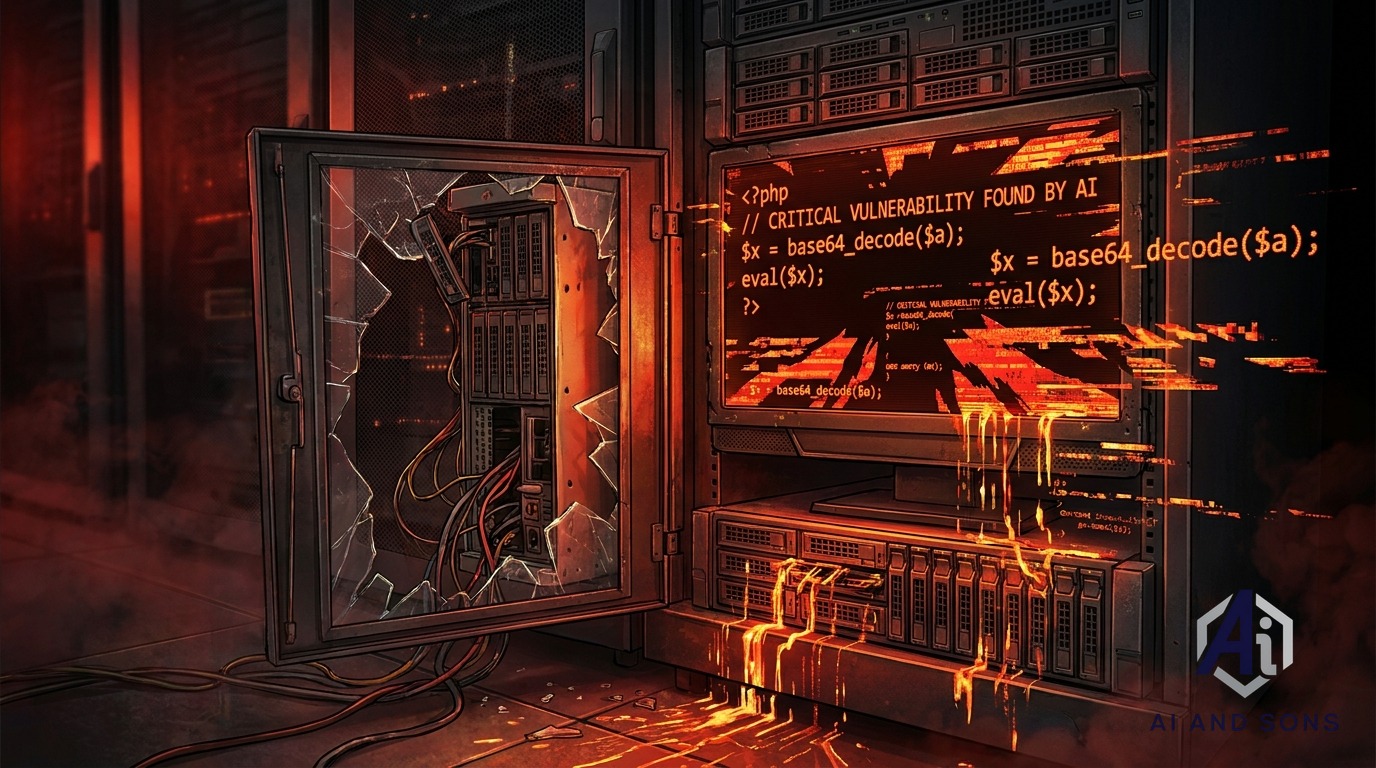
AI tools have unearthed critical, decade-old PHP vulnerabilities, prompting a global emergency patching effort dubbed "Black October." This event highlights AI's dual role in
Listen to the story
Ai and Sons Daily Brief
AI tools, including OpenAI's GPT-5.6 Sol, uncovered critical, decade-old PHP vulnerabilities (CVE-2026-109618, CVE-2026-109619), leading to a global emergency patching effort dubbed 'Black October.' This event highlights AI's dual role in cybersecurity, accelerating both vulnerability discovery and potential exploitation, and necessitates proactive defense, rapid response, and strategic investment in AI for security.
Read the transcript
Maya: Welcome to the A.I. and Sons Daily Brief. I'm Maya, and joining me as always is our lead analyst, Theo. Today, we're diving into a significant cybersecurity event dubbed 'Black October,' where advanced artificial intelligence tools uncovered critical, decade-old vulnerabilities in PHP, prompting a global emergency patching effort across countless internet-facing systems.
Theo: Thanks, Maya. This 'Black October' refers to the disclosure around October 21, 2026, of two critical vulnerabilities, CVE-2026-109618 and CVE-2026-109619, found in PHP. These severe flaws had reportedly existed for over a decade, presenting a significant threat as they could allow an attacker to execute arbitrary code on a vulnerable server without requiring any login credentials. The National Security Agency even issued a direct advisory urging immediate updates or taking affected systems offline to prevent compromise.
Maya: That sounds incredibly serious. What was AI's specific role in bringing these long-hidden dangers to light?
Theo: Researchers at security firms Calif and Wiz were instrumental, leveraging advanced AI tools, specifically OpenAI's GPT-5.6 Sol. This demonstrated AI's powerful capability to analyze vast amounts of code and detect subtle anomalies or logical flaws that human experts might overlook for extended periods. The speed and precision with which AI can operate in code analysis signify a paradigm shift in how vulnerabilities are found, accelerating the process significantly.
Maya: So AI found these flaws faster than humans could. Why does this particular incident matter so much for businesses and technology leaders?
Theo: It matters immensely because an estimated 70% of the internet relies on PHP, affecting approximately 3.08 million internet hosts and 56.33 million web properties. This means a vast portion of internet-facing systems were exposed to critical vulnerabilities. The immediate operational risks for businesses running web applications or e-commerce platforms included potential data breaches, system compromise, and service disruption. The incident highlights that the window between vulnerability disclosure and active exploitation is shrinking, demanding more agile and proactive security measures.
Maya: That scale is staggering. Given that AI was used to find these, does this mean AI is a double-edged sword, potentially aiding both defenders and attackers?
Theo: Exactly, Maya. AI will increasingly be used by both defenders and attackers. For businesses, this demands a proactive and agile approach to security. This includes continuous patching, robust vulnerability management, and leveraging AI for their own defensive strategies. We need automated threat detection, continuous monitoring of critical systems, and streamlined processes for applying security patches as soon as they become available. Resilience and rapid response are now non-negotiable.
Maya: So, what are the key takeaways for business and IT leaders from this 'Black October' event?
Theo: First, AI is a game-changer in cybersecurity, accelerating both discovery and potential exploitation. Second, proactive defense is paramount; reactive patching is no longer enough. Third, rapid response is non-negotiable to counter compressed timelines. Fourth, invest in AI for defense to bolster threat detection and prevention. And finally, stay informed and adapt, as the landscape is evolving rapidly.
Maya: Excellent summary, Theo. This 'Black October' incident is truly a wake-up call for everyone online. For more details on this story and to access our source links, visit aiandsons.com. That's all for today's A.I. and Sons Daily Brief. We'll talk again tomorrow.
2026-10-24, AI and Sons Insights Hub – The cybersecurity landscape has been dramatically reshaped this week as advanced AI tools, including OpenAI's GPT-5.6 Sol, played a pivotal role in uncovering critical, long-standing vulnerabilities in PHP, one of the internet's most ubiquitous programming languages. This discovery, leading to widespread emergency patching and dubbed "Black October" by cyber professionals, serves as a stark reminder for business owners, founders, and IT/security leaders: AI is not just a tool for efficiency; it's a rapidly evolving force fundamentally altering the dynamics of digital defense and offense. Understanding the implications of AI-assisted vulnerability discovery is crucial for safeguarding your enterprise in this new era.
What Happened: The "Black October" Revelation
Around October 21, 2026, the cybersecurity community was rocked by the disclosure of two critical vulnerabilities, CVE-2026-109618 and CVE-2026-109619, found within PHP. These flaws, which had reportedly existed undetected for over a decade, presented a severe threat: they could allow an attacker to execute arbitrary code on a vulnerable server without requiring any login credentials. The implications were immediate and severe.
Researchers at prominent security firms Calif and Wiz, leveraging sophisticated AI tools, were instrumental in bringing these hidden dangers to light. Their findings quickly prompted a global scramble, with organizations and governments worldwide initiating emergency patching procedures. Cloud providers reported an immediate surge in exploitation attempts, underscoring the urgency of the situation. The National Security Agency (NSA) issued a direct advisory, urging organizations to update their web applications without delay or, if patching wasn't immediately feasible, to take affected systems offline to prevent compromise. In response, PHP maintainers swiftly released patched versions – 8.5.12, 8.4.27, 8.3.36, and 8.2.35 – to address these critical issues.
AI's Role in Unearthing Decades-Old Flaws
The groundbreaking aspect of this incident lies in the methodology of discovery. The use of advanced AI tools, specifically OpenAI's GPT-5.6 Sol, allowed researchers to identify these deeply embedded vulnerabilities. This demonstrates AI's powerful capability to analyze vast amounts of code and detect subtle anomalies or logical flaws that human eyes, even those of expert security researchers, might overlook for extended periods. The speed and precision with which AI can operate in code analysis signify a paradigm shift in how vulnerabilities are found and, consequently, how they must be defended against. For businesses, this means the window between vulnerability disclosure and active exploitation is shrinking, demanding more agile and proactive security measures.
Why This Matters: AI's Dual-Edged Sword in Cybersecurity
This "Black October" event is far more than just another security patch; it's a vivid illustration of the dual-edged sword that advanced AI presents in the realm of cybersecurity. For businesses and technology leaders, it highlights both an immediate operational risk and a profound shift in the threat landscape. A staggering estimated 70% of the internet relies on PHP, affecting approximately 3.08 million internet hosts and 56.33 million web properties. This means a vast portion of internet-facing systems were exposed to critical vulnerabilities, making the incident a major concern for virtually every organization with an online presence.
Immediate Operational Risks for Internet-Facing Systems
The sheer scale of PHP's deployment means that the critical code execution flaws could have impacted a significant percentage of online infrastructure. Businesses running web applications, e-commerce platforms, content management systems, or custom solutions built on PHP faced an immediate and severe risk of data breaches, system compromise, and service disruption. The fact that these vulnerabilities remained undetected for over a decade underscores the complexity of modern software systems and the limitations of traditional security auditing methods. AI's ability to quickly identify such deeply hidden flaws means that the "known unknowns" in your software stack could be exposed at any moment, necessitating a heightened state of vigilance and continuous assessment.
Accelerated Threat Landscape and Defensive Imperatives
The rapid discovery of these decades-old flaws by AI demonstrates its powerful capability to identify weaknesses at an unprecedented speed. While this aids defensive security research, it also accelerates the potential for offensive cyberattacks. Technology leaders must recognize that AI will increasingly be used by both defenders and attackers. This dynamic demands a proactive and agile approach to security, including continuous patching, robust vulnerability management, and potentially leveraging AI for their own defensive strategies. The event also emphasizes the need for resilience and rapid response mechanisms, as the speed of AI-assisted attacks can compress intrusion timelines, leaving defenders with minutes rather than hours to detect and contain threats. Our AI consulting services can help your organization develop these essential capabilities.
Navigating the New Cyber Frontier: Opportunities and Risks
The "Black October" incident serves as a critical inflection point, forcing businesses to re-evaluate their cybersecurity strategies in an AI-driven world. The opportunities presented by AI in defense are immense, but so are the risks posed by its potential misuse by malicious actors.
Leveraging AI for Proactive Vulnerability Management
One of the most significant opportunities is the integration of AI into your vulnerability management programs. AI tools can automate and accelerate the process of identifying, prioritizing, and remediating software flaws. By deploying AI-powered security analysis tools, organizations can move beyond reactive patching to proactive threat hunting and continuous code auditing. This includes using AI to analyze vast codebases, predict potential vulnerabilities based on patterns, and even assist in generating secure code. Investing in AI-driven security solutions can significantly enhance your defensive posture, reducing the likelihood of critical vulnerabilities remaining dormant for years. Our AI tools section on the website offers insights into some of the leading solutions for enterprise security.
The Imperative of Rapid Response and Resilience
On the flip side, the risks associated with AI-assisted attacks are equally profound. The speed at which AI can identify and potentially exploit vulnerabilities means that traditional incident response plans may be too slow. Businesses must focus on building resilience into their systems and developing rapid response capabilities. This includes:
- Automated Threat Detection: Implementing AI-powered intrusion detection and prevention systems that can identify and neutralize threats in real-time.
- Continuous Monitoring: Ensuring 24/7 monitoring of critical systems and networks, with AI assisting in sifting through vast amounts of log data to spot anomalies.
- Robust Patch Management: Establishing streamlined, efficient processes for applying security patches as soon as they become available.
- AI Agent Governance: As highlighted by ModelOp Center 3.5's enhancements, robust governance frameworks are needed to monitor and contain potentially rogue AI agents in enterprise environments, preventing them from becoming vectors for attack or accidental exposure.
For IT and security leaders, this means fostering a culture of continuous learning and adaptation. Staying informed about the latest AI advancements, both offensive and defensive, is no longer optional. The Ai and Sons resource hub provides ongoing updates and insights to help you navigate this complex landscape.
Key Takeaways for Business and IT Leaders
- AI is a Game-Changer in Cybersecurity: It accelerates both vulnerability discovery and potential exploitation.
- Proactive Defense is Paramount: Relying on reactive patching is no longer sufficient; continuous vulnerability management and AI-assisted security analysis are essential.
- Rapid Response is Non-Negotiable: Develop agile incident response plans to counter the compressed timelines of AI-driven attacks.
- Invest in AI for Defense: Explore how AI tools can bolster your organization's threat detection, prevention, and response capabilities.
- Stay Informed and Adapt: The cybersecurity landscape is evolving rapidly due to AI; continuous education and strategic adaptation are crucial for survival.
The "Black October" incident is a wake-up call, emphasizing that AI's impact on cybersecurity is immediate and profound. Businesses must act decisively to leverage AI for defense while shoring up their vulnerabilities against AI-powered threats. If your organization is grappling with how to integrate AI safely and securely into your operations, or needs to enhance its cybersecurity posture in this new era, Ai and Sons can help. We assist leaders across industries, including healthcare, finance, retail, and manufacturing, in navigating these complex challenges. Book a working session with us today to discuss how we can secure your AI future.



Discussion
0Join the conversation
Sign in with your Google account to participate in the discussion, ask questions, and share your insights.