
FCC Approves SpaceX Starmind: 1 Million Orbital AI Satellites
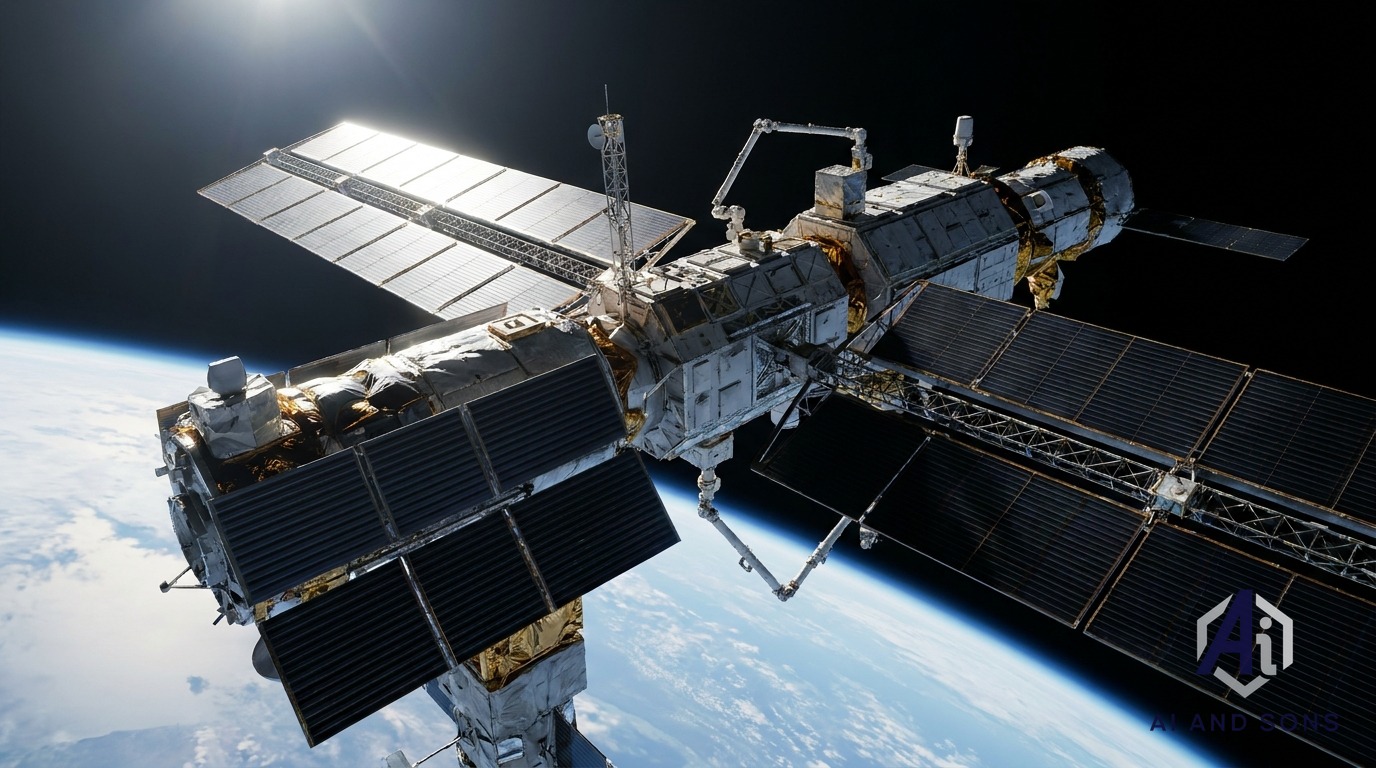
The FCC has approved SpaceX's Starmind project to deploy up to 1 million orbital AI data centers. Explore the timeline, thermal hurdles, and enterprise cloud impacts.
Listen to the story
Ai and Sons Daily Brief
Maya and Theo analyze FCC Order DA 26-1273 granting conditional approval for SpaceX's Starmind project to deploy up to one million orbital AI compute satellites, examining technical thermal limits, regulatory milestones, and enterprise infrastructure implications.
Read the transcript
Maya: Welcome to the A.I. and Sons Daily Brief. I am Maya, and with me is our analyst, Theo. Today, we cover a major regulatory decision from Washington. The Federal Communications Commission granted conditional approval under Order DA 26-1273 for SpaceX to operate Starmind, a constellation of up to one million orbital data center satellites for artificial intelligence. Theo, this moves orbital computing from whitepapers into regulatory reality. What stands out to you in the baseline architecture?
Theo: Thanks, Maya. The decision is rooted in terrestrial constraints. FCC Chairman Brendan Carr framed this as supporting America's emerging super intelligence computing economy by bypassing municipal grid bottlenecks, utility backlogs, and water moratoriums. By moving to low Earth orbit, Starmind seeks continuous solar energy. Technically, each baseline satellite unit, designated AI1, is slated for roughly one hundred seventy-five kilowatts of compute capacity, powered by deployable solar wings spanning about two hundred forty-six feet, with laser crosslinks coordinating distributed processing.
Maya: That technical footprint is massive, but the FCC attached binding deployment checkpoints rather than a blank check. SpaceX must operationalize its first active compute station by November 2033, reach ten percent or one hundred thousand satellites by 2035, hit fifty percent by 2038, and deploy all one million by 2040. Missing benchmarks means license forfeiture. Flights are also capped below six hundred kilometers pending orbital debris assessments. Theo, how should enterprise leaders view this timeline and shifting cloud topologies?
Theo: Enterprise architects should anticipate a bifurcated cloud model. Latency-critical transactional queries, edge inference, and day-to-day corporate applications will remain anchored in terrestrial data centers. In contrast, exascale, delay-tolerant processing, such as foundational model pre-training, parameter optimization, and massive agent swarms, could migrate to space. This evolution will also send ripples through enterprise supply chains, steering hardware allocations toward specialized radiation-hardened silicon, custom liquid radiators, and optical laser crosslinks.
Maya: Yet there is substantial pushback from scientists and competitors. Reporting from PCMag and the Associated Press emphasizes severe technical reservations from aerospace engineers and astrophysicists, especially around vacuum thermal management. Terrestrial centers use airflow and liquid chillers, but space offers no convection. Rejecting one hundred seventy-five kilowatts per satellite through radiative emission is unproven at this density. What other operational headwinds does SpaceX face?
Theo: Launch logistics and legal opposition are enormous hurdles. Deploying one hundred thousand platforms by 2035 demands a heavy-lift launch cadence well beyond current industry benchmarks. Meanwhile, the American Astronomical Society raises alarms over light pollution and observational interference. On the commercial front, satellite operators including Amazon and Viasat have filed petitions warning of orbital congestion, radio frequency degradation, and collision cascading risks known as Kessler syndrome. Anticipated legal appeals mean SpaceX faces significant regulatory volatility.
Maya: The key takeaway is that regulatory permission does not equal guaranteed operational deployment. While grid constraints on Earth are driving radical bets on orbital compute, massive physical, logistical, and legal barriers remain unresolved. That concludes today's brief. For the complete article and all original source links, visit aiandsons.com. I am Maya, alongside Theo, and thank you for tuning in to the A.I. and Sons Daily Brief.
WASHINGTON, D.C. — November 26, 2026 — In a regulatory decision that could fundamentally alter the trajectory of global cloud computing, the Federal Communications Commission (FCC) has granted conditional authorization to SpaceX to deploy and operate "Starmind." The ambitious initiative aims to construct an off-world computing constellation comprising up to 1,000,000 orbital data center satellites designed expressly for artificial intelligence workloads. For enterprise technology executives and IT leaders currently navigating land constraints, power-grid congestion, and cooling limits on Earth, the milestone signals that space-based infrastructure is rapidly moving from theoretical whitepapers into high-stakes regulatory reality.
The FCC Order: Breaking Down the Starmind Authorization
Under FCC Order DA 26-1273, adopted on Wednesday, November 25, 2026, the regulatory body approved SpaceX’s application to harness continuous, off-grid solar energy in low Earth orbit. FCC Chairman Brendan Carr described the move as an effort to fortify America’s emerging "super intelligence" (SI) computing economy by circumventing municipal terrestrial bottlenecks. Rather than relying on strained public utilities, the approved constellation seeks to leverage unfiltered solar irradiance beyond Earth's atmosphere.
The technical blueprint approved by regulators reveals an unprecedented scale of specialized hardware:
- Compute Node Architecture: The baseline satellite unit, designated AI1, is slated to feature roughly 175 kW of high-density AI compute capacity per platform.
- Energy Capture: Deployable solar wings spanning approximately 246 feet will supply continuous power during sun-synchronous phases.
- Vacuum Thermal Management: The nodes will utilize deployable liquid radiators engineered to radiate heat in the vacuum of space, foregoing atmospheric convection cooling entirely.
- Network Interconnects: Optical laser inter-satellite crosslinks will coordinate distributed processing in orbit, supported by a backup Ka-band radio-frequency framework operating on 18.8–19.3 GHz downlinks and 28.6–29.1 GHz uplinks.
The FCC established approved altitude windows ranging from 500 km to 1,002 km. However, the agency instituted a critical operational cap: immediate deployments remain restricted to altitudes below 600 km until federal regulators conclude deeper assessments regarding end-of-life orbital debris mitigation protocols.
Strict Milestones: The Regulatory Deployment Timeline
Far from a perpetual license, the FCC's conditional grant establishes binding, non-negotiable operational checkpoints. Failure to meet these build-out benchmarks will revoke SpaceX's allocated frequencies and operational authority:
- November 25, 2033: Operationalize and launch the first active orbital AI compute station.
- November 2035: Deploy 10% of the network (100,000 operational satellites).
- November 2038: Reach 50% constellation completion (500,000 operational units).
- November 2040: Achieve complete deployment of the full 1,000,000-satellite constellation.
Organizations tracking long-term compute sourcing via the Ai and Sons blog should view these timelines as a pacing guide. While market availability remains years away, the sheer capital and industrial commitments required over the next decade will actively influence global silicon allocations, liquid-cooling manufacturing, and heavy-lift space flight logistics.
Why Orbital Computing Matters to Enterprise Leadership
Modern frontier models, large-scale agent swarms, and synthetic data generation require astronomical compute density. On Earth, technology leaders are running directly into brick walls. Municipal data center construction faces severe utility backlogs, rising power costs, and increasing municipal and voter moratoriums on water and electricity consumption. Orbital compute theoretically evades terrestrial grid bottlenecks by deploying infrastructure directly into an environment offering uninterrupted solar access.
As these technologies develop, enterprise architects exploring our strategic services must prepare for a fundamentally altered infrastructure paradigm. Cloud topologies are likely to bifurcate over the coming decade:
- Localized Edge Inference: Latency-critical transactional queries, customer-facing interfaces, and local enterprise operations will stay rooted in terrestrial, edge-oriented data centers.
- Exascale Orbital Batches: Massive, delay-tolerant workloads—such as foundational model pre-training, parameter optimization, and large-scale agent simulations—could gradually shift to space-based compute clusters.
Furthermore, the federal government’s explicit reference to "super intelligence" infrastructure confirms that sovereign compute capacity is now viewed through the lens of national security and international industrial preeminence.
Critical Risks, Technical Doubts, and Industry Headwinds
Despite regulatory green lights, significant engineering, ecological, and economic skepticism persists. Enterprise decision-makers evaluating long-term roadmaps via our hub should temper speculative enthusiasm against several harsh physical realities.
Thermal Dissipation Hurdles in Space
According to reports published by PCMag and the Associated Press, aerospace engineers and independent astrophysicists harbor severe reservations regarding thermal dissipation. Terrestrial facilities rely on liquid chillers, ambient airflow, or evaporative cooling. In the vacuum of space, heat can only escape via radiative emission. Rejecting 175 kW of thermal energy per node without atmospheric convection remains technically unproven at this density, posing immense risks of hardware throttling or structural thermal failure.
Launch Economics and Heavy-Lift Cadence
Meeting the FCC’s 2035 requirement of 100,000 deployed units demands a launch cadence and payload capacity that far exceed present heavy-lift benchmarks. Even with rapid rocket reuse iterations, maintaining continuous deployment schedules while replacing degraded orbital nodes requires unprecedented industrial mobilization and massive capital expenditures.
Astronomical Concerns, Debris, and Legal Challenges
The proposal has met fierce resistance from both scientific institutions and commercial rivals. The American Astronomical Society (AAS) has voiced major alarms regarding light pollution, observational interference, and atmospheric debris. Concurrently, competing satellite operators, including Amazon and Viasat, have filed formal petitions citing extreme orbital congestion, radio-frequency spectrum degradation, and the heightened probability of cascading debris collisions (Kessler syndrome). Formal legal appeals against the FCC's order are widely anticipated, creating a prolonged period of regulatory volatility.
Strategic Takeaways for Technology Decision-Makers
- Terrestrial Grid Constraints Are Driving Radical Innovation: The approval of orbital compute underscores that land, power, and water limits on Earth are pushing the tech sector toward high-risk, capital-intensive infrastructure alternatives.
- Regulatory Authorization Does Not Equal Deployment: The FCC's strict benchmarks (100,000 satellites by 2035; 1,000,000 by 2040) create severe execution hurdles that could result in license forfeiture if technical barriers intervene.
- Long-Range Planning for Bifurcated Topologies: IT leaders should follow orbital computing developments to anticipate a split between localized low-latency edge nodes and remote, off-grid training clusters.
- Prepare for Supply Chain and Silicon Shifts: The immense demand for radiation-hardened silicon, custom liquid radiators, and laser crosslinks will influence enterprise hardware pricing and availability across the broader tech landscape.
Navigating the complex realities of modern computing infrastructure requires objective analysis, robust governance, and practical execution. Whether you are modernizing your company’s internal architectures or evaluating safe deployments across specialized tools, our experienced advisors help executive teams cut through industry hype. To assess how shifts in compute infrastructure, model hosting, and AI security impact your enterprise roadmap, book a working session with Ai and Sons today.


Discussion
0Join the conversation
Sign in with your Google account to participate in the discussion, ask questions, and share your insights.