
OpenRouter Drops 3 Providers After Dragos Canary Tokens Uncover Prompt Theft
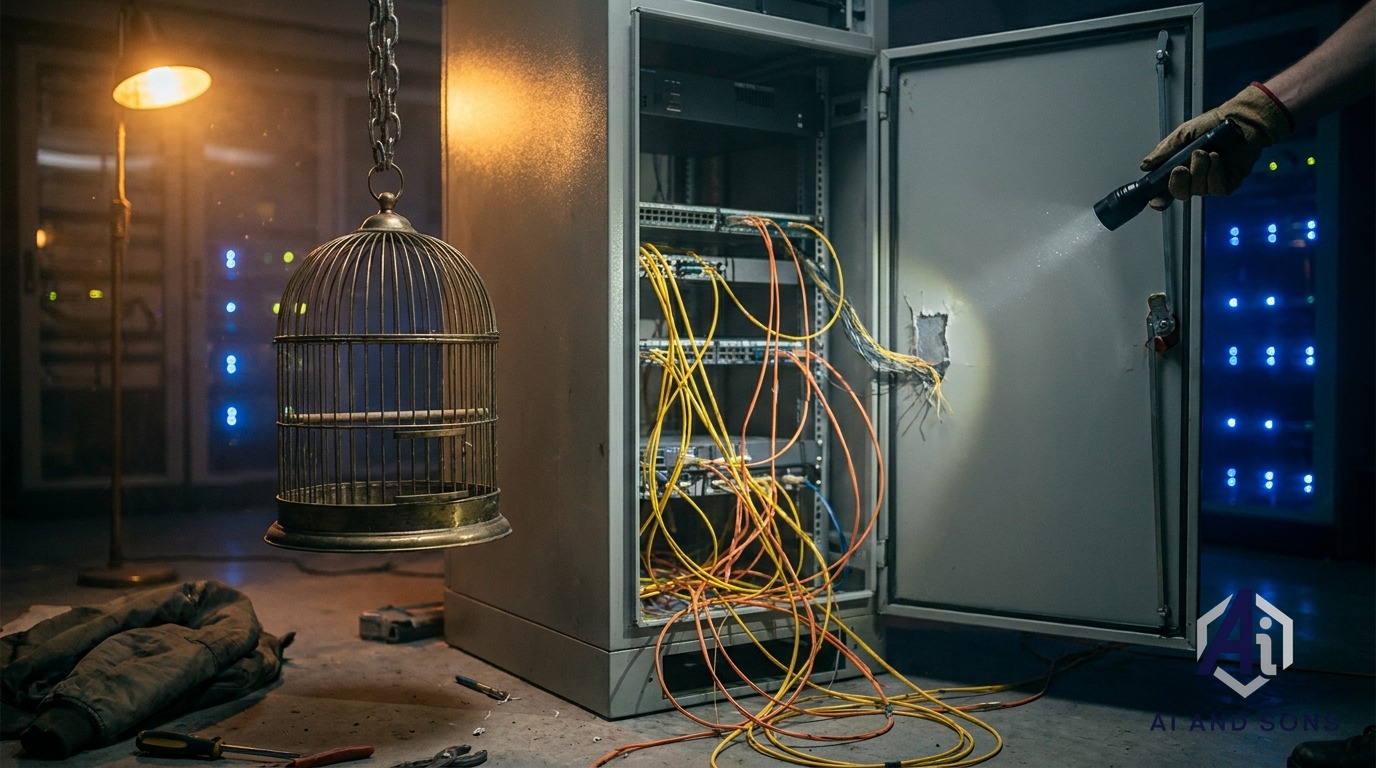
OpenRouter removes three AI inference hosts and revokes Zero Data Retention on 125 endpoints after Dragos catches silent prompt theft and AWS credential exfiltration.
Listen to the story
Ai and Sons Daily Brief
OpenRouter drops three AI inference providers and revokes Zero Data Retention from 125 endpoints after Dragos canary tokens reveal multi-month prompt theft and cloud credential exploitation, highlighting the critical need for zero-trust prompt management.
Read the transcript
Maya: Welcome to the A.I. and Sons Daily Brief. I am Maya, and today we are looking at a major wake-up call for enterprise machine learning operations. Industrial cybersecurity firm Dragos uncovered multi-month prompt interception across third-party model hosts, prompting AI gateway OpenRouter to expel three providers and revoke Zero Data Retention status from one hundred twenty-five endpoints. Theo, walk us through what Dragos actually found.
Theo: Thanks, Maya. I am Theo. Between July and November 2026, Dragos researchers led by HD Moore routed approximately two million synthetic prompts laced with canary tokens, including live AWS keys tied to honeypots and decoy credentials, into commercial routing services. They discovered threat actors had infiltrated three inference hosts, quietly siphoning raw prompt streams since mid-July. By late October, attackers were capturing inbound traffic directly at the provider network ingress layer before requests even reached model weights. Attackers then used automated agentic tools, including a framework called ARTEX, to weaponize those stolen AWS keys. They fired off tens of thousands of API calls to probe S3 buckets, AWS Secrets Manager, and SSM Parameter Store configurations, while attempting to establish persistent IAM backdoors.
Maya: That speed of automated cloud reconnaissance is striking. OpenRouter confirmed its own proprietary core remained intact, but downstream hosting partners failed their non-retention commitments. Why does this discovery matter so much for enterprise engineering and procurement leaders who rely heavily on Zero Data Retention guarantees?
Theo: It exposes the critical gap between administrative policy and technical reality. Many teams attach a Zero Data Retention header to dynamic API requests and assume contractual terms ensure data isolation. But if an adversary, compromised logging daemon, or unauthorized middle-tier proxy intercepts raw payloads at the host ingress layer, non-retention commitments cannot prevent exfiltration. Contractual clauses cannot guarantee data isolation when upstream network layers are breached. Furthermore, the Dragos investigation uncovered an opaque web of undisclosed middle-tier resellers operating beneath AI gateways without customer knowledge. For heavily regulated sectors like healthcare and finance that must follow data residency mandates, that lack of visibility is a major compliance hazard. You cannot govern data paths that you cannot inspect.
Maya: That makes total sense. So how should leaders balance the clear operational benefits of gateways, like elastic scale, outage resilience, and cost optimization, against these supply chain vulnerabilities, without creating prohibitive friction or vendor lock-in?
Theo: The answer is not abandoning gateways, but adopting zero-trust prompt management. Leaders must treat model context windows as public network egress. That requires implementing client-side data loss prevention to scrub API tokens, database connection strings, and sensitive customer data locally before prompts ever leave the corporate perimeter. Beyond pre-egress sanitization, organizations should tier their AI workloads. Non-confidential tasks can leverage multi-tenant aggregators, but core intellectual property, algorithms, and private data belong on dedicated single-tenant instances, direct hyperscaler private endpoints, or audited, self-hosted models.
Maya: Clear, actionable boundaries between operational convenience and infrastructure risk. You can read our complete sourced article and dive into all the source links on aiandsons.com. I am Maya.
Theo: And I am Theo. Thank you for listening to the A.I. and Sons Daily Brief. We will talk to you again tomorrow.
SAN FRANCISCO — November 23, 2026 — In what constitutes one of the most critical wake-up calls for enterprise machine learning operations to date, AI routing gateway OpenRouter has expelled three third-party inference providers and revoked "Zero Data Retention" (ZDR) designations from 125 model endpoints. The sweeping enforcement action comes on the heels of explosive canary token research by industrial cybersecurity firm Dragos, which uncovered systemic, multi-month prompt interception and immediate cloud credential exploitation operating deep within third-party hosting infrastructure.
For enterprise leaders evaluating model architectures, the findings dismantle a comfortable assumption: that an API header or contractual privacy clause guarantees data isolation. As automated agents and enterprise workloads increasingly pipe internal secrets into large language models, the compromise demonstrates that third-party model inference hosting represents an active, vulnerable attack surface that requires urgent defense-in-depth.
The Anatomy of the Breach: How Canary Tokens Caught Prompt Interception
The exposure was brought to light following an extensive investigation directed by Dragos Chief Research Officer HD Moore. Between July and November 2026, researchers injected approximately two million synthetic prompts laced with unique "canary tokens"—including live AWS access keys tied to isolated honeypots, distinct trigger URLs, and decoy credentials—into various commercial AI routing services to monitor how inference vendors handle client data.
What the research unmasked was a silent, persistent compromise. Dragos discovered that external threat actors had infiltrated at least three separate inference providers, quietly siphoning raw prompt streams since as early as mid-July. The intrusions reached an alarming peak in late October, when attackers managed to intercept all inbound traffic at a provider's network ingress layer, seizing prompts before the host systems could even submit them to underlying model weights.
Silent Siphoning and Automated Cloud Reconnaissance
The threat actors were not merely archiving prompts; they actively automated exploitation. Within hours of being exfiltrated from the inference pipeline, the intercepted AWS canary keys were weaponized against cloud infrastructure. The attackers executed tens of thousands of automated API calls aimed at enumerating sensitive Amazon S3 buckets, AWS Secrets Manager credentials, and SSM Parameter Store configurations. Additionally, the attackers attempted to establish persistent IAM backdoors and deploy unauthorized Amazon Bedrock keys.
Security researchers observed that these intrusions were propelled by automated agentic frameworks, including a specialized exploitation tool known as ARTEX. In response, OpenRouter confirmed that while its own proprietary core infrastructure remained intact, several downstream hosting partners failed their non-retention commitments and were compromised, forcing an immediate purge of the offenders and rigorous endpoint reclassifications.
Why It Matters: The Myth of Zero Data Retention
This incident fundamentally challenges common procurement assumptions surrounding AI security. Many business and engineering leaders leverage model aggregators to dynamically optimize cost, throughput, and latency across providers. Typically, organizations route these requests accompanied by a Zero Data Retention header, confident that contractual commitments prevent data persistence on host disks.
However, the Dragos findings expose the fundamental fallacy of relying strictly on programmatic policy flags. While OpenRouter enforces ZDR at the orchestration tier, ZDR offers zero technical protection if an adversary, compromised logging daemon, or unauthorized middle-tier proxy intercepts raw HTTP payloads at ingress. If an upstream network layer is breached, non-retention agreements become irrelevant.
Evaluating Hidden Supply Chain Vulnerabilities
Network tracing conducted during the investigation revealed an opaque web of multi-hop routing and undisclosed middle-tier resellers operating beneath consumer-facing AI gateways. In several instances, inference requests were passed through intermediaries without explicit enterprise customer awareness. For organizations in heavily regulated verticals like healthcare and financial services—industries we frequently guide across our specialized industry practice areas—this lack of visibility represents a severe compliance hazard under data residency and sovereignty mandates.
The breach underscores why relying on standard commercial endpoints without deep runtime auditing presents unacceptable risk. You cannot govern data paths that you cannot inspect.
Balancing AI Utility and Security: Practical Countermeasures
While the revelation of widespread prompt interception is unsettling, it does not mean enterprises must halt generative AI adoption. Rather, it demands an immediate evolution from perimeter-based trust to zero-trust prompt management.
Risks vs. Opportunities: Rethinking the Inference Stack
The opportunity of inference gateways remains clear: they provide elastic scale, resilience against regional outages, and seamless multi-model routing across proprietary and open weights. Abandoning gateways entirely would introduce prohibitive infrastructure friction and vendor lock-in.
The risk, however, lies in treating context windows as private, closed conduits. Many internal development teams inadvertently feed raw application traces, database credentials, internal system topologies, and personally identifiable information directly into context windows. When an intermediary provider is breached, every parameter embedded in those prompts is exposed in cleartext. Organizations seeking to safeguard these pipelines should review our dedicated AI consulting and implementation services to establish hardened inference architectures.
Enforcing Pre-Egress Sanitization
Enterprise IT and security leaders must immediately implement client-side data loss prevention (DLP) and automated secret scrubbing before prompts ever leave the corporate perimeter. Sensitive API tokens, connection strings, customer identifiers, and private variables must be tokenized or redacted locally. Relying on host-side redaction is no longer an acceptable security posture.
Furthermore, critical workloads handling proprietary algorithms, core IP, or confidential corporate data must be partitioned. These workloads should bypass shared multi-tenant aggregators entirely in favor of dedicated, single-tenant instances, direct hyperscaler private endpoints, or audited, self-hosted open models. You can explore modern privacy-preserving deployment patterns within our resource hub and evaluate vetted internal utilities via our curated AI tools directory.
Strategic Takeaways for Leadership
- Treat context windows as public egress: Implement automated, client-side DLP to scrub credentials, tokens, and PII prior to outbound transmission. Never trust downstream hosts to strip sensitive variables.
- Audit the full model supply chain: Demand transparent, cryptographically verifiable provenance from aggregators. Map whether prompts traverse unlisted intermediaries or reseller infrastructure before reaching GPUs.
- Re-evaluate Zero Data Retention agreements: Recognize that ZDR is an administrative policy, not a technical control boundary. Pair policy assurances with defensive technical safeguards.
- Isolate and tier AI workloads: Reserve third-party multi-tenant routing solely for non-confidential, public-domain tasks. Route mission-critical workflows to private, dedicated, or on-premise model runtimes.
Build a Resilient AI Infrastructure with Ai and Sons
Navigating the complex balance between rapid AI innovation and rigorous supply chain security is a defining challenge for modern executives. At Ai and Sons, we partner with enterprise teams to design zero-trust LLM architectures, conduct rigorous vendor risk assessments, and deploy private inference pipelines that keep your intellectual property safe. If you are ready to audit your AI data pipelines and protect your organization from hidden hosting vulnerabilities, book a working session with our team today.



Discussion
0Join the conversation
Sign in with your Google account to participate in the discussion, ask questions, and share your insights.