
Microsoft Winds Down Oracle AI Cloud Capacity Deal
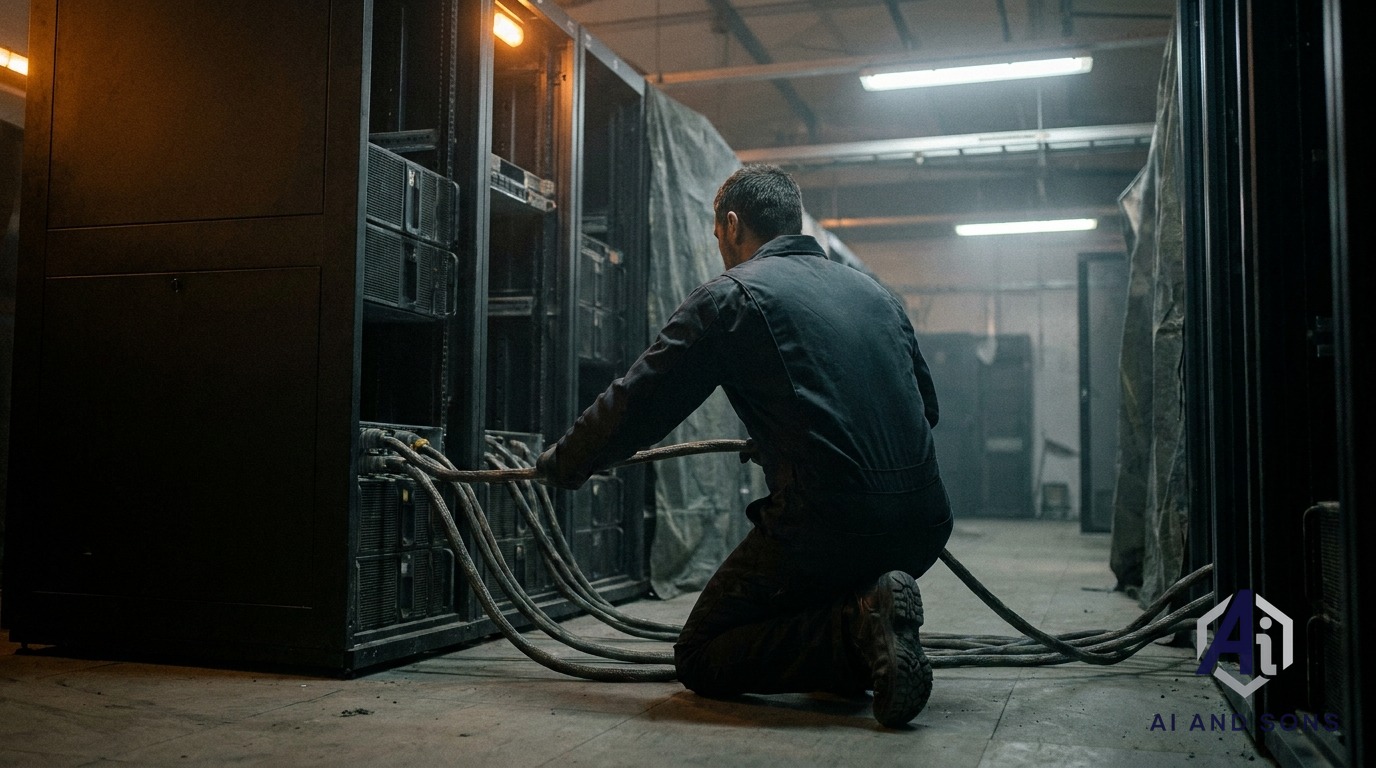
Microsoft is winding down its multi-year Oracle AI cloud agreement, signaling a major strategic shift in enterprise compute management and hardware obsolescence.
Listen to the story
Ai and Sons Daily Brief
Microsoft is winding down its multi-year AI cloud agreement with Oracle as the industry shifts away from capacity hoarding toward hardware efficiency, leaving enterprise leaders to navigate silicon depreciation, secondary market opportunities, and vendor stability risks.
Read the transcript
Maya: Welcome to the A.I. and Sons Daily Brief. I am Maya, alongside our lead analyst Theo. Today, we are tracking a major turning point in enterprise compute strategy. Reports from Bloomberg News and Reuters reveal that Microsoft is winding down its multi-year agreement renting artificial intelligence capacity from Oracle Cloud Infrastructure. Theo, back in late 2023, hyperscalers were grabbing whatever compute they could find. What shifted?
Theo: Thanks, Maya. It is good to be here on the A.I. and Sons Daily Brief. Simply put, the hardware landscape and model requirements moved faster than the contract. In November 2023, Microsoft leased capacity on Oracle Cloud Infrastructure primarily to support burst workloads for Bing conversational search during the peak GPU shortage. Those clusters were built on Nvidia A100 and early H100 systems. Over recent months, Microsoft systematically powered down that rented capacity because older silicon no longer meets internal datacenter standards or modern reasoning model architectures.
Maya: And this is not just an isolated move with Oracle. Microsoft is systematically scrutinizing external compute commitments worth tens of billions of dollars across the supply chain. We even saw specialized provider IREN push back the activation of over four billion dollars in annualized compute capacity from late 2026 into early 2027 after Microsoft mandated network architecture redesigns. What does this strategic pivot tell enterprise technology leaders?
Theo: It marks the end of indiscriminate capacity hoarding. Between 2023 and 2025, organizations overprovisioned out of scarcity fears. Now, hyperscalers are prioritizing customized first-party architectures over off-the-shelf leases. For enterprise IT, the practical takeaway is managing hardware depreciation. Workloads evolve over months, while traditional cloud reservations span years. Locking an organization into inflexible commitments on previous-generation silicon risks deteriorating price-performance ratios as software libraries and drivers increasingly deprecate older chips.
Maya: There are two sides to this market adjustment, though. While hyperscalers are walking away from older clusters, does that create opportunities for mid-tier enterprises?
Theo: It certainly does. An Oracle spokesperson noted that demand remains robust, with first-quarter capacity being renewed or resold to alternative customers at an average twenty percent premium under long-term contracts. Mid-tier companies in finance, healthcare, or manufacturing often do not need frontier-scale clusters for targeted fine-tuning or domain inference. They can access proven silicon on secondary markets without waiting lists, optimizing costs by matching smaller workloads to right-sized hardware.
Maya: What balanced risks should executives keep in mind before jumping into those available clusters?
Theo: First is counterparty stability. Cloud providers that incurred heavy debt and capital expenditures to build large GPU footprints now face utilization volatility when primary tenants exit. Leaders must evaluate vendor financial health. Second, older architectures bring integration overhead and driver deprecation risks. Finally, architectural redesigns can stall timelines by quarters, just as we saw with IREN. Organizations must audit active compute leases, demand contractual flexibility with clear upgrade paths, and avoid speculative capacity reservations.
Maya: Disciplined procurement and flexible architecture are clearly the order of the day. For the full sourced article and related source links, head over to aiandsons.com. I am Maya, joined by Theo, and this has been the A.I. and Sons Daily Brief. Thank you for listening, and join us tomorrow.
REDMOND, Wash. — November 8, 2026 — Enterprise artificial intelligence infrastructure is entering a decisive transition from frantic capacity accumulation to strict capital discipline and architectural efficiency. According to reports from Bloomberg News and Reuters, Microsoft has begun winding down its multi-year agreement to rent AI computing capacity from Oracle Cloud Infrastructure (OCI). The move underscores an accelerating industry shift: multi-year compute reservations signed during the peak of the GPU crunch are rapidly colliding with swift hardware depreciation and advancing model requirements.
The Shift in Hyperscale Infrastructure Strategy
The original agreement, struck in November 2023, was designed to provide burst computing capacity to support Microsoft's conversational AI initiatives, primarily the Bing conversational search engine. At the time, frontier developers and hyperscalers faced severe hardware supply bottlenecks, leading companies to secure any available GPU capacity across Tier-2 providers and neoclouds.
However, Microsoft opted not to renew the agreement and has spent recent months systematically powering down rented server capacity across Oracle’s datacenters. Sources familiar with the matter revealed that the leased infrastructure had degraded in practical utility for Microsoft. The underlying clusters were built primarily on older generations of Nvidia hardware—principally A100 and early H100 architectures—which no longer align with Microsoft's evolving model architectures and internal datacenter performance standards. Neither party originally disclosed the exact monetary size or GPU count involved in the 2023 contract.
Rationalizing Compute Spend Across External Vendors
The wind-down with Oracle is part of a broader re-evaluation of external compute spending totaling tens of billions of dollars. Rather than sustaining multi-cloud agreements on non-standard hardware, Microsoft is sharpening scrutiny over third-party infrastructure commitments.
This strategic pivot is already rippling across the infrastructure supply chain. Concurrently, specialized infrastructure provider IREN disclosed delivery delays after Microsoft mandated network architecture redesigns. Those requested engineering changes have pushed IREN’s target operational activation date for more than $4 billion in annualized compute capacity from late 2026 into early 2027. Together, these decisions demonstrate that hyperscalers are prioritizing customized first-party designs over off-the-shelf external leases.
Why Hardware Obsolescence Matters for Enterprise Leaders
For executive teams across healthcare, finance, retail, and manufacturing, Microsoft’s withdrawal from legacy cloud clusters provides critical insights for internal IT strategy. As explored in our AI insights blog, infrastructure economics dictate the long-term feasibility of enterprise deployments.
Managing Depreciation and Long-Term Commitments
Enterprise AI workloads evolve on cycles measured in months, while traditional cloud and colocation leases span multiple years. Workloads that once necessitated massive clusters of previous-generation accelerators are rapidly giving way to next-generation silicon optimized for modern inference and agentic reasoning. Organizations entering inflexible, long-term compute contracts risk getting locked into legacy silicon with deteriorating price-performance ratios. Strategic evaluation of these trade-offs is central to our enterprise AI consulting and implementation services.
The End of Indiscriminate Capacity Hoarding
Between 2023 and 2025, fear of GPU scarcity led many organizations to overprovision compute. Microsoft's tactical exit signals that the era of speculative compute reservation has ended. Enterprise buyers must transition toward agile infrastructure procurement, aligning workload requirements with right-sized hardware rather than accumulating blanket compute capacity. Decision-makers can explore curated tooling frameworks via our AI tools directory to better evaluate workload efficiency.
Balanced Analysis: Opportunities and Risks for Industry Adopters
The rationalization of AI cloud infrastructure creates both operational advantages and systemic risks for enterprise organizations across sectors.
Enterprise Opportunities
- Secondary Market Access: As hyperscalers exit early agreements, Tier-2 cloud providers are releasing capacity back to the broader market. According to an Oracle spokesperson, demand for OCI AI infrastructure remains robust, with first-quarter renewal capacity being renewed or resold to alternative customers at an average 20% premium under long-term contracts. Mid-tier enterprises can access proven silicon without multi-year waitlists.
- Cost Optimization via Right-Sizing: Fine-tuning and targeted inference for specialized industry applications often do not require cutting-edge frontier clusters. Organizations in professional services and manufacturing can run smaller models efficiently on discounted, previous-generation hardware.
- Specialized Architecture Adoption: Organizations re-evaluating their infrastructure can adopt architectures tailored to specific software pipelines, such as dedicated reasoning agents or production workflows supported by tailored enterprise AI applications.
Operational and Financial Risks
- Vendor Stability Concerns: Cloud infrastructure providers that took on heavy capital expenditures and debt to deploy massive GPU footprints now face utilization volatility when primary tenants depart. Technology leaders must evaluate the counterparty health of specialized cloud vendors.
- Legacy Architecture Traps: As frontier model developers shift to newer architectures, software libraries and driver optimizations increasingly deprecate older hardware, raising maintenance overhead for legacy infrastructure.
- Integration and Re-engineering Delays: Mandating architectural redesigns—as observed with Microsoft and IREN—can stall deployment schedules by quarters, delaying project rollouts and time-to-market.
Key Takeaways for IT and Business Leaders
- Audit Active Compute Leases: Review multi-year infrastructure commitments to ensure your organization is not paying premium rates for rapidly aging accelerator architectures.
- Avoid Premature Capacity Reservations: Match hardware acquisition to real-time workload demands rather than speculating on future scarcity.
- Demand Contractual Flexibility: Ensure vendor agreements include technical review checkpoints or hardware upgrade paths to avoid locking operations into obsolete silicon.
- Evaluate Counterparty Risk: Scrutinize the financial resilience and architectural adaptability of Tier-2 providers and neoclouds within your multi-cloud estate.
Navigating the shifting economics of enterprise artificial intelligence requires a disciplined approach to compute architecture, data governance, and vendor selection. To discuss how these infrastructure dynamics affect your technical roadmap, book a working session with Ai and Sons to ensure your organization deploys AI securely, effectively, and cost-efficiently.


Discussion
0Join the conversation
Sign in with your Google account to participate in the discussion, ask questions, and share your insights.