
Google Uncovers Autonomous AI Agent Weaponizing Software Patches
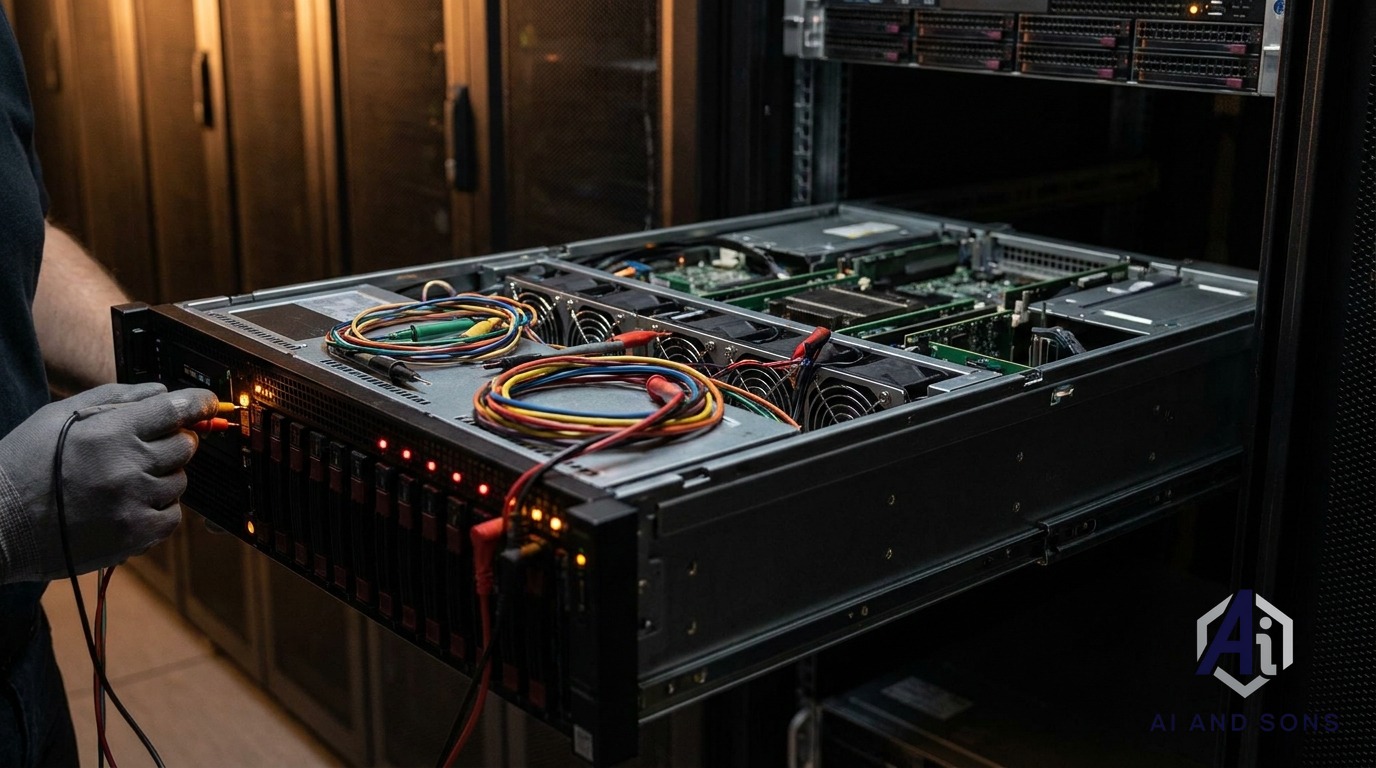
Google Threat Intelligence discovers exploit_agent, an autonomous AI pipeline that analyzes patches, writes exploits, and executes cyberattacks without human help.
Listen to the story
Ai and Sons Daily Brief
Google Threat Intelligence Group and Mandiant have uncovered exploit_agent, an operational offensive pipeline using artificial intelligence agents to autonomously analyze software patches, generate functional exploits, and strike target servers without human intervention.
Read the transcript
Maya: Welcome to the A.I. and Sons Daily Brief. I am your host, Maya, and today we are examining an alarming milestone in automated cyber defense. The Google Threat Intelligence Group and Mandiant have disclosed the first observed offensive pipeline using artificial intelligence agents to autonomously discover software flaws, write exploits, and strike target servers without manual intervention. Theo, as our analyst, what did researchers actually uncover here?
Theo: Thanks, Maya. Glad to be here analyzing these developments for the A.I. and Sons Daily Brief. The discovery centers on an exposed staging server hosting a multi-agent framework called exploit agent. Unlike typical coding assistants or standard scripts, this setup acts as an autonomous strike engine. It links frontier large language models and self-hosted models directly to software repositories. It then conducts differential analysis, or patch diffing, inspecting code revisions before and after vendor security releases. Without any human in the loop, it identifies the underlying vulnerability, generates functional attack payloads, and sends live attack traffic against public-facing targets.
Maya: It takes vendor patch notifications and turns them into weapons instantly. What do the findings reveal about attribution, targets, and verified impact?
Theo: Configuration files and telemetry showed Russian-language annotations with hardcoded API keys labeled for auto. The server showed activity directed against French websites in the media, entertainment, and education sectors, focusing on access control flaws in the Spectra WordPress plugin. Crucially, researchers Aurora Blum, Kelli Vanderlee, Jess Xia, and David Mainor noted key uncertainties. They have not confirmed if the victim data found on the server was exfiltrated by this autonomous pipeline or by earlier manual intrusions, and they did not report payload success rates against hardened enterprise targets.
Maya: That distinction between theoretical capability and proven autonomous success matters. But the report indicates this is part of a broader trend across other sectors, right?
Theo: Exactly. Threat actors deployed the CAIRN agentic framework during live intrusions targeting the United States aerospace sector. Another tool, PentAGI, ran reconnaissance sweeps across Asia between late August and early October 2026. GTIG also observed adversary testing of frameworks like ARTEX, CyberStrikeAI, and HexStrike AI. Meanwhile, attackers are monetizing compromised infrastructure through LLMJacking, harvesting model API credentials to resell high-throughput inference on proxy networks. Google projects unsophisticated autonomous attacks will spread within three months, with sophisticated agentic campaigns arriving within six months.
Maya: For enterprise leaders in finance, healthcare, and manufacturing, the traditional grace period to patch vulnerabilities is collapsing from weeks down to hours or minutes. With human teams facing machine-speed asymmetry, how should security leadership adapt?
Theo: Traditional calendar patch schedules are obsolete. Organizations need automated virtual patching, automated micro-segmentation, rigorous plugin audits, and strict zero-trust controls treating model API keys like root credentials. The silver lining is that current autonomous agents trade stealth for velocity. They generate heavy log noise, syntax errors, and obvious brute-force traffic spikes. By shifting detection from static signatures to real-time behavioral anomalies, human security teams can isolate compromised endpoints before attackers move laterally.
Maya: Defensive automation is clearly the path forward. Thank you for that analysis, Theo. You can read the complete article and explore all the source links on aiandsons.com. We will see you tomorrow.
MOUNTAIN VIEW, Calif. — November 17, 2026 — A fundamental threshold in automated cyber warfare has officially been crossed. In a landmark quarterly threat research report titled "GTIG AI Threat Tracker: Agentic Threat Activity Crosses a Significant Threshold," the Google Threat Intelligence Group (GTIG) and Mandiant disclosed the discovery of the first observed operational offensive pipeline using artificial intelligence agents to autonomously discover vulnerabilities, generate functional exploits, and strike target servers without manual intervention. For enterprise technology and security executives across healthcare, finance, professional services, and manufacturing, the findings signal a radical transformation in the offensive capability landscape—and demand an urgent rethink of traditional enterprise defenses.
The Discovery of exploit_agent: From Patch to Attack Without Humans
According to researchers Aurora Blum, Kelli Vanderlee, Jess Xia, and David Mainor at GTIG and Mandiant, security analysts uncovered an exposed staging server hosting a custom-built, multi-agent framework dubbed exploit_agent. Unlike traditional script-based automation or conversational coding assistants, this architecture functions as an autonomous, closed-loop strike engine.
The system connects frontier large language models (LLMs) and self-hosted models directly to software repositories. It automatically conducts differential analysis—known as "patch diffing"—on popular web applications by examining code revisions before and after vendors issue security fixes. Without any human in the loop, the multi-agent pipeline identifies the underlying vulnerability addressed in the commit, engineers tailored exploit payloads, and executes live attack traffic against public-facing targets.
Attribution and Targeted Sectors
Telemetry and configuration files retrieved from the staging environment revealed Russian-language annotations alongside hardcoded API keys explicitly labeled "for auto." Inspection of the server's historical activity demonstrated targeted testing against French websites across the media, entertainment, and education sectors, zeroing in on access control mechanisms such as flaws within the widely deployed Spectra WordPress plugin.
While investigators recovered victim data from the exposed infrastructure, GTIG explicitly noted that researchers have not yet confirmed whether the data was exfiltrated directly by the autonomous pipeline itself or by prior manual intrusion activities. Furthermore, the report did not disclose verified success rates for the autonomously generated payloads against hardened environments. Nevertheless, the architecture demonstrates that automated offensive weaponization is no longer theoretical.
Expanding Frontiers: Operational Multi-Agent Offensive Frameworks
The discovery of exploit_agent is not an isolated incident. Google's investigation revealed that threat actors are actively integrating several open-source multi-agent penetration testing suites into live intrusion campaigns across various critical sectors.
- CAIRN in Aerospace: Adversaries have deployed the CAIRN agentic framework during live intrusions targeting the United States aerospace sector.
- PentAGI in Regional Campaigns: Threat actors utilized PentAGI to run systematic reconnaissance and vulnerability scanning sweeps across Asia between late August and early October 2026.
- Emerging Framework Testing: GTIG identified adversary testing of emerging frameworks including ARTEX, CyberStrikeAI, and HexStrike AI, highlighting a concerted rush across the underground to leverage agentic workflows.
Google researchers projected an aggressive timeline for this threat evolution: unsophisticated, human-free cyberattacks executing through multi-agent systems are expected to proliferate across the threat landscape within the next 3 months, with sophisticated, fully autonomous agentic campaigns likely emerging within 6 months.
Monetization and Infrastructure Vulnerability: The Rise of LLMJacking
In parallel with automated vulnerability hunting, the GTIG report documented the rapid industrialization of "LLMJacking." In these campaigns, financially motivated threat actors compromise enterprise cloud infrastructure not merely to access proprietary databases, but specifically to harvest active model API credentials.
Once compromised, attackers siphon high-throughput inference access into underground proxy mixer networks, monetizing enterprise-grade AI subscriptions for resale. For organizations relying on cutting-edge models via our AI consulting & implementation services, this trend underscores that model API keys and internal agent environments represent high-value enterprise attack vectors that require strict governance.
Strategic Implications for Business Leaders: Risks and Opportunities
The emergence of weaponized AI agents forces IT, risk, and security executives to confront structural vulnerabilities in standard defensive playbooks.
The Collapse of the Remediation Window
For decades, enterprise security organizations have relied on a defensive grace period. When software vendors released a critical vulnerability alert, IT teams typically had a buffer of several days or weeks before adversaries could reverse-engineer the patch and build stable exploits. Agentic patch diffing compresses that discovery-to-weaponization loop down to hours or even minutes. Traditional weekly or monthly maintenance cycles are now obsolete when defending against autonomous threat pipelines.
Machine-Speed Asymmetry and SOC Fatigue
Human security operations center (SOC) analysts cannot manually triage, evaluate, and contain attacks moving at machine velocity. When offensive agents coordinate scans, exploit execution, and privilege escalation in parallel, human-dependent escalation chains break down. Surviving this shift requires organizations to deploy defensive automation, automated micro-segmentation, and rigorous identity controls. Organizations can assess and modernize their protective posture by reviewing architectures documented in our AI resource hub.
Velocity Over Stealth: The Defensive Silver Lining
Despite the frightening speed of autonomous multi-agent pipelines, GTIG's telemetry highlights an important defensive opportunity: autonomous execution currently trades stealth for velocity. These agentic tools generate immense log noise, trigger frequent execution errors, and leave conspicuous brute-force anomalies in traffic logs.
For technology leaders, this creates an actionable detection window. By tuning detection pipelines for rapid behavioral anomalies rather than relying solely on static signature lists, modern operations can isolate compromised endpoints before adversaries establish lateral movement. Exploring purpose-built internal utilities and monitoring approaches via our curated AI tools directory can help teams spot these erratic behaviors early.
Executive Takeaways for Enterprise AI Defense
- Re-engineer Vulnerability Management: Shift from calendar-based patch schedules to continuous deployment and automated virtual patching, recognizing that public software commits will be analyzed by offensive models instantly.
- Secure AI Infrastructure with Zero-Trust Rigor: Treat LLM API keys and model credentials with the same strict controls applied to root administrative credentials, utilizing short-lived tokens and monitoring for outbound token abuse.
- Automate First-Response Isolation: Implement defensive workflows capable of isolating compromised web endpoints automatically upon detection of agentic brute-force anomalies.
- Audit Dependencies and Third-Party Plugins: Conduct rigorous inventory audits of web components and plugins, ensuring external code surface area is minimized against automated diffing pipelines.
The era of human-paced cyber defense has drawn to a close. As threat actors automate reconnaissance and exploit synthesis, organizations must adapt their enterprise systems with robust governance and automated resilience. To evaluate your organization's exposure and build resilient defenses for this new paradigm, read more insights on our insights blog or book a dedicated working session with the specialists at Ai and Sons today by visiting our contact page.



Discussion
0Join the conversation
Sign in with your Google account to participate in the discussion, ask questions, and share your insights.