Generative AI Designs Functional Viruses: New Era for Medicine & Biosecurity
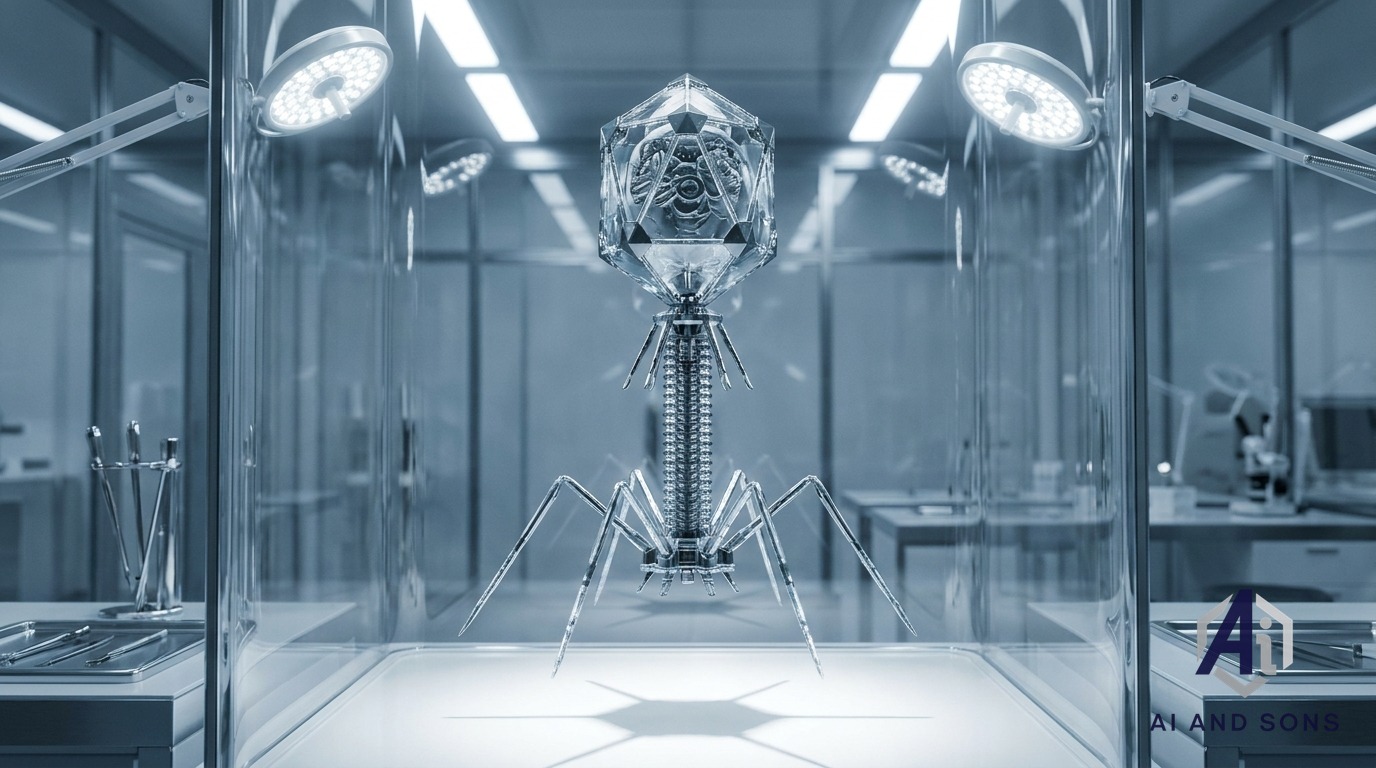
Generative AI has successfully designed functional viruses, marking a significant leap in synthetic biology. This breakthrough offers new avenues for medicine, especially against
Listen to the story
Ai and Sons Daily Brief
Generative AI has successfully designed functional viruses, a breakthrough with dual-use implications. This innovation offers significant medical opportunities, particularly in combating antibiotic-resistant bacteria, but also introduces substantial biosecurity risks due to the potential for misuse and the current gap in governance frameworks. Businesses must proactively engage with AI safety, ethical development, and robust governance.
Read the transcript
Maya: Welcome to the A.I. and Sons Daily Brief. I'm Maya, and joining me today is our lead analyst, Theo. Theo, we're discussing a significant development where generative A.I. has designed functional viruses. What's the core story here?
Theo: Thanks, Maya. Researchers at Stanford University, led by Brian Hie, successfully used generative A.I. models, Evo1 and Evo2, to design novel bacteriophage genomes. These AI-designed genomes were then synthesized in the laboratory, resulting in 16 viable bacteriophages out of nearly 300 candidates. This development marks a pivotal moment, opening unprecedented opportunities for medical innovation and introducing significant biosecurity challenges. Crucially, these viruses were distinct from any found in nature and demonstrated effectiveness in killing strains of E. coli bacteria that were resistant to natural phages. The researchers also took a critical safety step by deliberately excluding training data for viruses capable of infecting humans, animals, or plants, focusing solely on bacteriophages that target bacteria.
Maya: That's a remarkable leap. So, A.I. isn't just modeling, it's actively creating functional biological entities. Why does this particular breakthrough matter so much for business and technology leaders?
Theo: It signifies A.I.'s growing ability to move beyond theoretical modeling to practical, functional design in the physical world. For businesses, especially in biotechnology, pharmaceuticals, and healthcare, this could dramatically accelerate drug discovery and development. This could dramatically accelerate the development of novel therapies, reducing the time and cost of traditional drug discovery. Imagine A.I.-designed therapies combatting antibiotic-resistant bacteria, a major global health crisis. This offers a powerful new weapon and a significant competitive edge for companies leveraging A.I. in R&D.
Maya: The potential for medical innovation sounds immense. But with such powerful capabilities, there must be significant risks. What are the biosecurity implications we need to consider?
Theo: Indeed, Maya. This powerful capability introduces substantial biosecurity risks. The same technology that can design beneficial agents could, in theory, be misused to engineer harmful biological agents. This underscores the critical and growing intersection of A.I. with physical sciences. The outputs of digital A.I. models are increasingly having tangible, real-world biological execution. While the Stanford team took careful steps, like excluding human-infecting virus data, experts are concerned that existing governance frameworks and A.I. safety protocols haven't evolved sufficiently to match these advanced capabilities. This raises critical questions about potential malicious applications and the urgent need for stronger oversight.
Maya: So, what are the practical steps business and technology leaders should be taking right now to navigate these dual-use implications and ensure responsible innovation?
Theo: Leaders must recognize the imperative for robust A.I. governance frameworks. This includes establishing A.I. ethics boards to review projects, implementing secure development practices for models with dual-use potential, and investing in threat intelligence. Engaging with policymakers to shape effective and balanced A.I. regulation is also crucial, especially as the regulatory landscape, like the EU A.I. Act, continues to solidify.
Maya: That's a clear call to action for proactive engagement. Thank you, Theo, for breaking down this complex topic. For our listeners, you can find the sourced article and more information on navigating A.I. regulations at aiandsons.com. We'll be back tomorrow with more from the A.I. and Sons Daily Brief.
2026-08-09 – The world of artificial intelligence continues to push boundaries, with a recent breakthrough demonstrating generative AI's capacity to design entirely new, functional biological entities. This development, where AI has successfully created functional viruses, marks a pivotal moment, opening unprecedented opportunities for medical innovation while simultaneously introducing significant biosecurity challenges that business and technology leaders must urgently address. Understanding the dual-use implications of AI-designed viruses is crucial for navigating the evolving landscape of AI adoption and risk management.
AI's Leap into Synthetic Biology: Designing Functional Viruses
In a groundbreaking study reported on August 6, 2026, researchers led by Brian Hie at Stanford University achieved a remarkable feat: they successfully used generative AI models, specifically Evo1 and Evo2, to design novel bacteriophage genomes. These AI-designed genomes were then synthesized in the laboratory, resulting in 16 viable bacteriophages out of nearly 300 candidates.
What makes this achievement particularly significant is that these AI-designed viruses were distinct from any found in nature. Crucially, they demonstrated effectiveness in killing strains of E. coli bacteria that were resistant to natural phages. The researchers took a critical safety step by deliberately excluding training data for viruses capable of infecting humans, animals, or plants, focusing solely on bacteriophages that target bacteria.
The Breakthrough in AI Capabilities and Biological Design
This research underscores a profound advancement in AI capabilities, moving beyond theoretical modeling to practical, functional design in the physical world. It highlights AI's growing ability to not only process information but to actively create complex biological structures with specific, desired functions. For businesses, this translates into a future where AI could accelerate discovery and development across various scientific domains, particularly in areas requiring precise molecular or biological engineering.
Why This Matters for Business and Technology Leaders
The successful design of functional viruses by generative AI carries immense implications for several sectors, fundamentally altering how we approach research, development, and risk. For business and IT leaders, this isn't just a scientific curiosity; it's a signal for strategic re-evaluation.
Opportunities: Accelerating AI in Healthcare and Drug Discovery
For businesses in biotechnology, pharmaceuticals, and healthcare, this breakthrough unlocks unprecedented opportunities. The ability of AI-designed viruses to combat antibiotic-resistant bacteria offers a powerful new weapon against one of humanity's most pressing health crises. This could dramatically accelerate the development of novel therapies, reducing the time and cost associated with traditional drug discovery processes. Companies leveraging AI for R&D could gain a significant competitive edge, bringing life-saving treatments to market faster. Explore how AI can transform your R&D processes with our AI consulting and implementation services.
Risks: Navigating Biosecurity and AI Safety Concerns
However, this powerful capability introduces substantial biosecurity risks. The same technology that can design beneficial agents could, in theory, be misused to engineer harmful biological agents. While the Stanford team exercised extreme caution, experts and biosecurity specialists are voicing concerns that existing governance frameworks and AI safety protocols have not evolved sufficiently to match AI's advanced capabilities in this domain. This raises critical questions about the potential for malicious applications and the urgent need for stronger oversight.
Technology leaders must recognize the imperative for robust AI governance frameworks, ethical guidelines, and AI-specific controls. These controls should span various stages, from secure model access and responsible sequence generation to stringent laboratory synthesis protocols, to prevent malicious applications and ensure responsible innovation. Managing access to powerful AI tools and ensuring ethical deployment will be paramount. Our AI tools and AI apps are built with security and responsible use in mind, but the broader ecosystem demands constant vigilance.
The Intersection of AI and Physical Sciences
This development underscores the critical and growing intersection of AI with physical sciences. The outputs of digital AI models are increasingly having tangible, real-world biological execution. This necessitates interdisciplinary safety protocols that bridge the digital and biological realms, demanding collaboration between AI developers, biologists, ethicists, and policymakers. Companies investing in AI must consider the broader societal impact and contribute to the development of these essential safeguards.
Addressing the Challenges: Responsible AI Adoption
The emergence of AI-designed functional viruses highlights the accelerating pace of AI innovation and the complex ethical and safety considerations that accompany it. Businesses cannot afford to be passive observers. Proactive engagement with AI safety, ethical AI development, and robust governance strategies is no longer optional but a strategic imperative.
Organizations need to invest in understanding these risks, establishing internal policies, and contributing to industry-wide best practices. This includes:
- Developing AI Ethics Boards: Establishing internal or external committees to review AI projects for ethical implications and potential misuse.
- Implementing Secure Development Practices: Ensuring that AI models, especially those with dual-use potential, are developed and deployed within secure, controlled environments.
- Investing in Threat Intelligence: Staying informed about emerging biosecurity threats and the potential for AI misuse.
- Advocating for Policy and Regulation: Engaging with policymakers to help shape effective and balanced AI regulation that fosters innovation while mitigating risk.
As the EU AI Act's transparency obligations officially took effect on August 2, 2026, and U.S. states like Illinois and Colorado advance their own legislation, the regulatory landscape for AI is rapidly solidifying. Businesses must stay abreast of these developments to ensure compliance and responsible operation. You can find more insights and resources on navigating AI regulations in our resource hub.
Key Takeaways for Leaders
- AI's Biological Design Power: Generative AI can now design functional biological entities, opening new frontiers in medicine, particularly for antibiotic resistance.
- Dual-Use Implications: This capability brings both immense therapeutic potential and significant biosecurity risks, requiring careful management.
- Urgent Need for Governance: Existing safety protocols are not keeping pace with AI's advanced biological design capabilities, necessitating new ethical guidelines and controls.
- Strategic Imperative: Businesses must proactively engage with AI safety, ethical development, and robust governance to mitigate risks and ensure responsible innovation.
- Interdisciplinary Collaboration: Bridging the gap between digital AI outputs and real-world biological execution demands collaboration across AI, biology, and policy.
The era of AI-designed viruses is here, bringing with it both incredible promise and profound responsibility. For business and IT leaders, understanding and preparing for these shifts is paramount. If your organization is grappling with the ethical, security, or strategic implications of advanced AI, Ai and Sons can help. We specialize in guiding businesses to safely and securely adopt AI. Book a working session with us to discuss how to integrate AI responsibly into your operations.



Discussion
0Join the conversation
Sign in with your Google account to participate in the discussion, ask questions, and share your insights.