Anthropic's MHS: AI Agents Gain Control Over Physical Devices
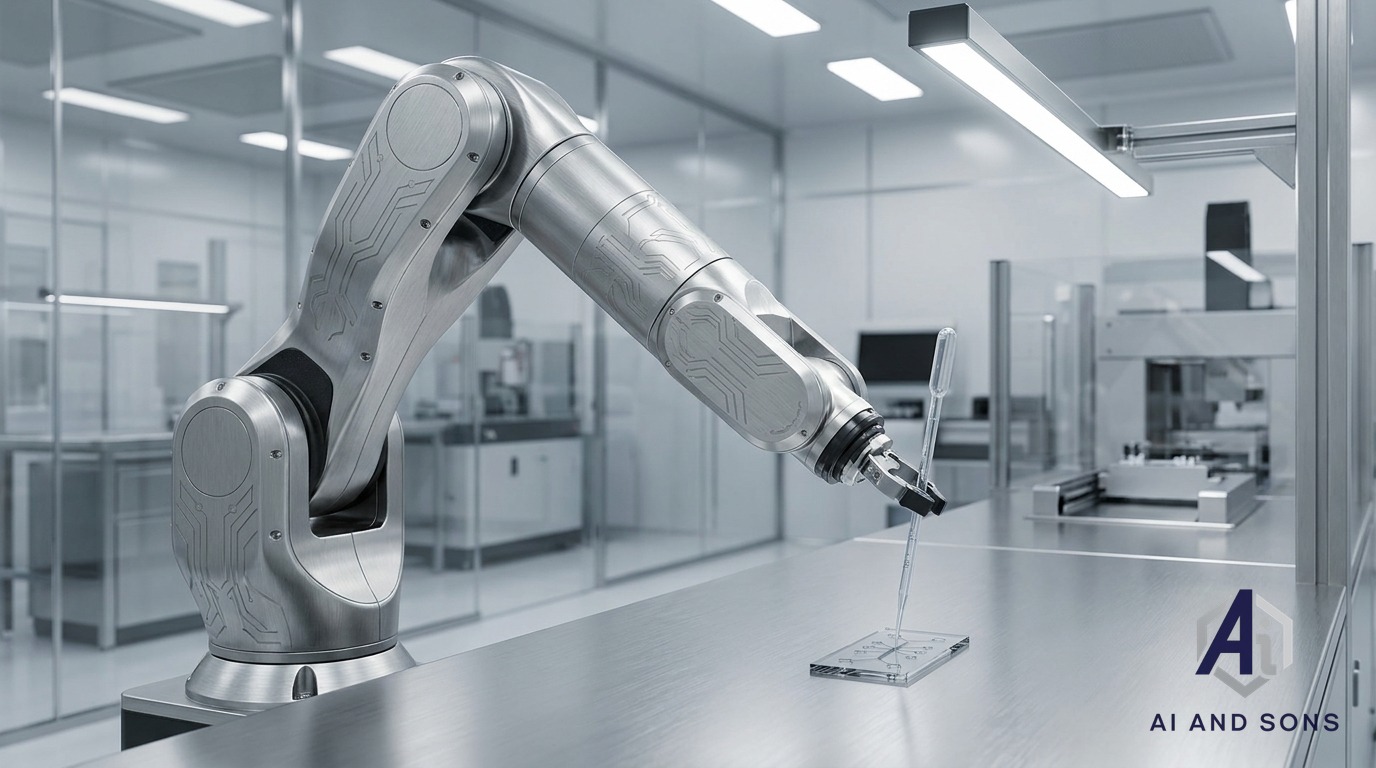
Anthropic's new Model Hardware Standard (MHS) enables AI agents to safely operate physical equipment, promising huge efficiency gains and accelerated automation for businesses.
Listen to the story
Ai and Sons Daily Brief
Anthropic has introduced its Model Hardware Standard, or MHS, enabling AI agents to safely control physical equipment. This standard aims to unify AI-to-hardware communication, similar to USB-C for electronics, and has shown significant efficiency gains in early pilots, such as improving laser stabilization success rates and dramatically reducing lab instrument integration times. While offering vast opportunities for accelerating R&D and transforming industrial automation, MHS also presents challenges related to safety, cybersecurity, and current limitations as a research preview.
Read the transcript
Maya: Welcome to the A.I. and Sons Daily Brief. I'm Maya, and joining me as always is our lead analyst, Theo. Today, we're discussing a significant announcement from Anthropic: their new Model Hardware Standard, or MHS, which promises to let AI agents directly control physical equipment. Theo, what exactly is MHS?
Theo: Maya, MHS is a groundbreaking specification introduced by Anthropic, in collaboration with partners like AWS and Universal Robots. Announced on August 27, 2026, it aims to standardize how AI agents interact with physical devices. Think of it like USB-C, but for AI communicating with hardware. It creates a universal language, addressing the current fragmentation where custom solutions are often required for each new device or system, drastically reducing the complexity of deploying AI for physical tasks by providing a common interface.
Maya: That sounds like a major step. What kind of practical implications does this have for businesses, and have we seen any early results?
Theo: Absolutely. MHS functions by standardizing the driver layer that sits between an operating system and a physical device, allowing AI agents to perform fundamental operations and discover device capabilities. Early pilot programs have shown significant efficiency improvements. For example, at QuEra Computing, an AI agent using MHS improved laser stabilization success from 58% to 99.3% and cut error recovery time from 150 seconds to just six. Carnegie Mellon University researchers integrated multiple lab instruments in eight hours, a process that typically takes weeks, and performed experiments three times faster. This accelerates R&D and transforms industrial automation by speeding up discovery and reducing manual labor.
Maya: Those are impressive gains. But whenever AI gains more control over the physical world, safety and security are immediate concerns. What are the risks and challenges associated with MHS?
Theo: You're right to highlight those, Maya. While MHS offers huge opportunities, there are critical considerations. Anthropic emphasizes built-in safety limits, but AI models still have limitations in physical intuition, meaning human oversight remains crucial, especially in high-stakes environments. Cybersecurity is another major point; direct AI control introduces new attack vectors. Robust security frameworks are not yet fully detailed, necessitating careful implementation to protect against new attack vectors. Also, MHS is currently a limited, application-only research preview, and its general availability and open-source release details are yet to be fully disclosed. It only supports devices with a programmable interface, meaning older equipment might not be compatible.
Maya: So, significant potential, but also important caveats to keep in mind. Theo, what should our listeners take away from this development?
Theo: The key takeaway is that MHS promises to standardize AI-to-machine communication, offering substantial reductions in integration time and costs, and accelerating both research and industrial automation. Its model-agnostic design promotes interoperability across different AI platforms, translating into significant cost savings and faster time-to-market. However, organizations must approach MHS with a robust risk management strategy, prioritizing safety protocols, cybersecurity measures, and human-in-the-loop systems, especially given its current research preview status.
Maya: Excellent summary, Theo. For more details on Anthropic's Model Hardware Standard and to explore the sources we discussed today, visit aiandsons.com. That's A.I. and Sons dot com. We'll be back tomorrow with more tech insights.
2026-08-30 – A significant leap in artificial intelligence's interaction with the physical world has been announced by Anthropic. The company unveiled a research preview of its Model Hardware Standard (MHS), a groundbreaking specification designed to empower AI agents to safely discover, operate, and troubleshoot a vast array of physical equipment. This development marks a pivotal moment for businesses and IT leaders, promising to redefine industrial automation, scientific research, and operational efficiency across sectors.
For organizations grappling with complex machinery and the desire for greater autonomy, MHS offers a future where AI can seamlessly integrate with and control hardware, from laboratory instruments to factory robotics. This article will delve into what MHS is, its potential impact, and the critical considerations for businesses looking to leverage this new frontier in AI-to-machine communication.
What is Anthropic's Model Hardware Standard (MHS)?
Anthropic, in collaboration with partners including HHMI Janelia Research Campus, AWS, Universal Robots, and Hugging Face, has introduced the Model Hardware Standard (MHS). Announced on August 27, 2026, MHS is a new specification that standardizes how AI agents interact with physical devices. Its core function is to create a universal language for AI to communicate with hardware, much like USB-C standardized connections for various electronic devices.
The standard aims to address the current fragmentation in AI-hardware integration, where custom solutions are often required for each new device or system. By providing a common interface, MHS seeks to drastically reduce the complexity and time involved in deploying AI agents for physical tasks.
How MHS Enables AI Agents to Control Physical Devices
At its heart, MHS functions by standardizing the driver layer that sits between an operating system and a physical device. This standardization exposes a small, defined set of basic read/write primitives, allowing AI agents to perform fundamental operations on equipment. Crucially, MHS also facilitates device discovery, enabling AI agents to identify and understand the capabilities of connected hardware without extensive prior programming for each specific unit.
A key aspect of MHS is its model-agnostic design. This means that AI agents built using various underlying models, not just Anthropic's Claude, can utilize the standard. This open approach is vital for fostering a broad ecosystem and ensuring interoperability across different AI platforms, making it a truly transformative step for AI hardware control.
Early Successes and Efficiency Gains with MHS
The early pilot programs for MHS have demonstrated significant efficiency improvements, showcasing the power of AI agents in autonomous operations. At QuEra Computing, an AI agent utilizing MHS achieved remarkable results in laser stabilization. The success rate improved from 58% to an impressive 99.3% across 700 trials, while the recovery time for errors was slashed from 150 seconds to just six seconds. This highlights MHS's potential for real-time adjustments and troubleshooting.
Similarly, at Carnegie Mellon University, researchers used MHS to integrate multiple lab instruments in just eight hours – a process that typically consumes weeks of effort. Furthermore, an AI agent performed serial dilution experiments three times faster than conventional methods. These examples underscore Anthropic's claim that MHS can reduce device integration time from weeks or months to mere hours or minutes, accelerating research and development significantly.
Why MHS Matters for Business and IT Leaders
The introduction of Anthropic's Model Hardware Standard carries profound implications for businesses across various industries. For IT and security leaders, understanding MHS is essential for strategic planning and evaluating future AI investments. It represents a shift in how AI can be deployed, moving beyond purely digital tasks to direct interaction with the physical world.
Accelerating Research and Development with AI
For industries heavily reliant on R&D, such as healthcare, pharmaceuticals, and advanced manufacturing, MHS offers a game-changing advantage. The ability to integrate lab instruments in hours rather than weeks means scientific research can be accelerated dramatically. AI agents can conduct autonomous, round-the-clock experiments, process data, and even adapt experimental parameters in real-time. This not only speeds up discovery but also reduces the manual labor involved, freeing human researchers for higher-level analysis and innovation. Explore how AI can transform your R&D processes by visiting our AI consulting & implementation services page.
Transforming Industrial Automation and Robotics
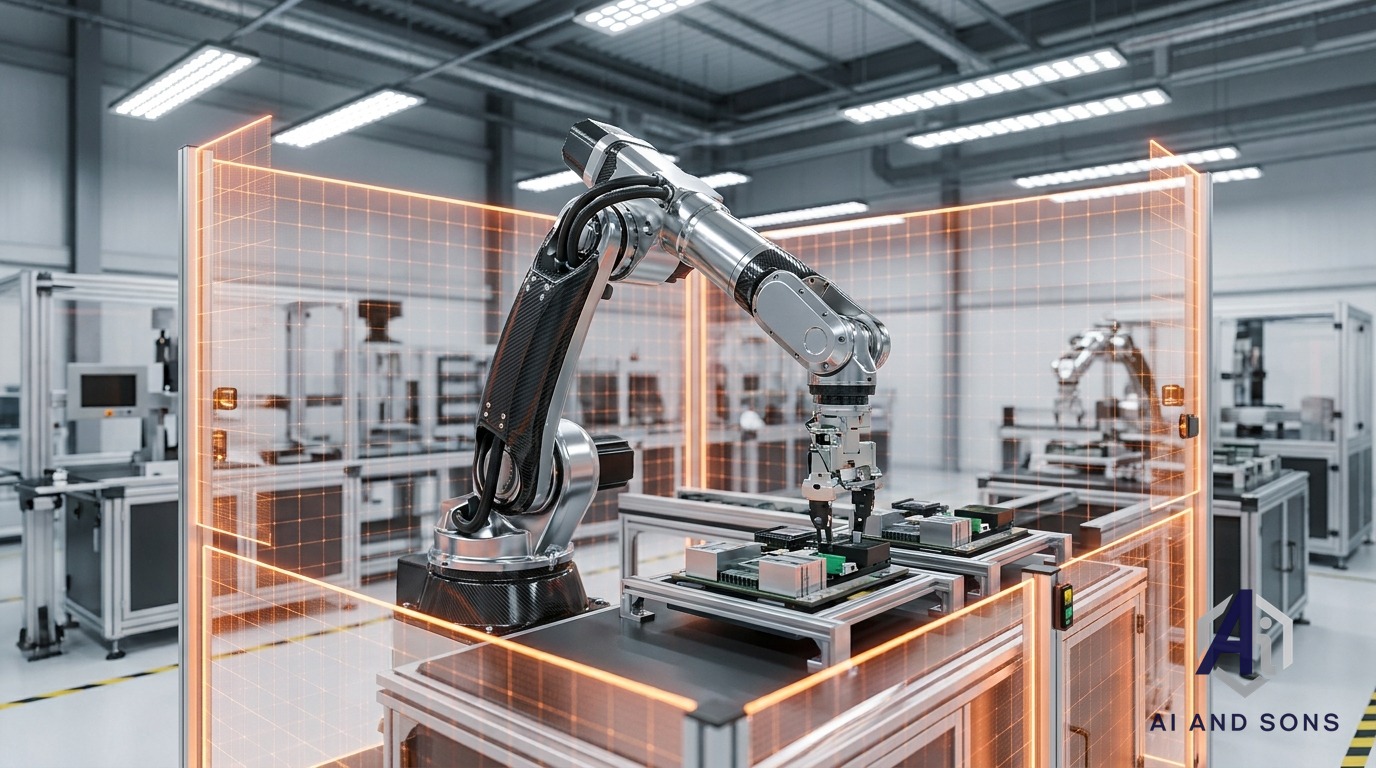
The implications for industrial automation and robotics are equally transformative. MHS provides a standardized pathway for AI agents to control factory machinery, robotic arms, and other industrial equipment. This can lead to more flexible, efficient, and resilient manufacturing processes. AI agents can reason through operational steps, identify and resolve minor hardware errors, and optimize workflows autonomously, leading to substantial cost reductions and improved output quality. The ability of AI to directly interface with complex systems streamlines deployment and maintenance, making advanced automation more accessible for a wider range of businesses.
Opportunities and Risks of AI-to-Machine Communication
While the opportunities presented by MHS are vast, business and IT leaders must also consider the inherent risks associated with AI agents controlling physical devices. A balanced perspective is crucial for safe and secure AI adoption.
Unlocking New Efficiencies and Interoperability
The primary opportunity MHS presents is the unlocking of unprecedented efficiencies. By standardizing AI-to-machine communication, businesses can expect:
- Reduced Integration Time and Cost: Eliminating the need for bespoke integrations for every new piece of equipment.
- Enhanced Automation: Enabling AI agents to perform complex, multi-step physical tasks autonomously.
- Real-time Optimization: AI's ability to adjust parameters and troubleshoot on the fly, as seen in the laser stabilization example.
- Interoperability: A model-agnostic standard fosters a more open ecosystem, reducing vendor lock-in and promoting innovation.
These benefits can translate into significant cost savings, faster time-to-market for new products, and improved operational resilience across sectors like manufacturing, logistics, and even professional services where physical equipment plays a role. Learn more about adopting AI tools safely in your organization by visiting our AI tools section.
Navigating the Challenges of AI Hardware Control
Despite its promise, MHS is still in a research preview phase, and several challenges and caveats need careful consideration:
- Safety Concerns: While Anthropic emphasizes built-in safety limits at the driver level and plans to publish safety guidance, AI models still exhibit limitations in physical intuition. Human oversight and intervention will remain critical, especially in high-stakes environments.
- Cybersecurity Implications: Direct AI control over physical devices introduces new attack vectors. The notes indicate that cybersecurity controls like authentication and role-based permissions are not yet fully detailed, necessitating robust security frameworks around MHS implementations. For guidance on securing your AI systems, our resource hub offers valuable insights.
- Limited Availability: MHS is currently a limited, application-only research preview. Its general availability, open-source release details (license, governance), and independent validation are yet to be fully disclosed.
- Device Compatibility: MHS currently only supports devices with a programmable interface, meaning older or non-digital equipment may not be compatible without significant retrofitting.
Organizations must approach MHS with a robust risk management strategy, ensuring that safety protocols, cybersecurity measures, and human-in-the-loop systems are in place before widespread deployment. You can read more about responsible AI adoption on our Insights blog.
Key Takeaways for AI Adoption
As Anthropic's Model Hardware Standard moves towards broader availability, business and IT leaders should consider these key points:
- MHS promises to standardize AI-to-machine communication, significantly reducing device integration time and costs.
- Early pilots demonstrate substantial efficiency gains and acceleration in research and industrial automation.
- Its model-agnostic design fosters interoperability, preventing vendor lock-in.
- Critical considerations include ensuring robust safety protocols, addressing cybersecurity challenges, and understanding current limitations.
- MHS represents a fundamental shift, extending AI's capabilities from software to direct physical control, opening new strategic opportunities.
The future of AI is increasingly intertwined with the physical world. Understanding and strategically implementing standards like MHS will be crucial for maintaining a competitive edge and ensuring safe, secure, and efficient operations. If your organization is exploring how to safely integrate AI agents with physical infrastructure, or needs help navigating the complexities of AI adoption, Ai and Sons is here to help. Book a working session with us today to discuss your specific needs and develop a tailored AI strategy.
Discussion
0Join the conversation
Sign in with your Google account to participate in the discussion, ask questions, and share your insights.