
Anthropic Unveils Claude Opus 4.7: Pushing Boundaries in Agentic AI

Anthropic's newly released Claude Opus 4.7 brings notable performance gains in advanced software engineering, 'xhigh' effort levels, and task budgets, while maintaining previous pricing.
A Notable Leap in Agentic Capabilities
Today, Anthropic officially released Claude Opus 4.7, a major update designed to enhance advanced software engineering, coding, and multi-step agentic performance. Business leaders and product teams can leverage this new model across all Claude products, the Claude API, and via partners like Amazon Bedrock, Google Cloud's Vertex AI, and Microsoft Foundry.
What's New in Opus 4.7?
- Unmatched Agentic Performance: Opus 4.7 demonstrates significant improvements in handling complex, multi-step tasks natively, a crucial requirement for enterprise agentic workflows.
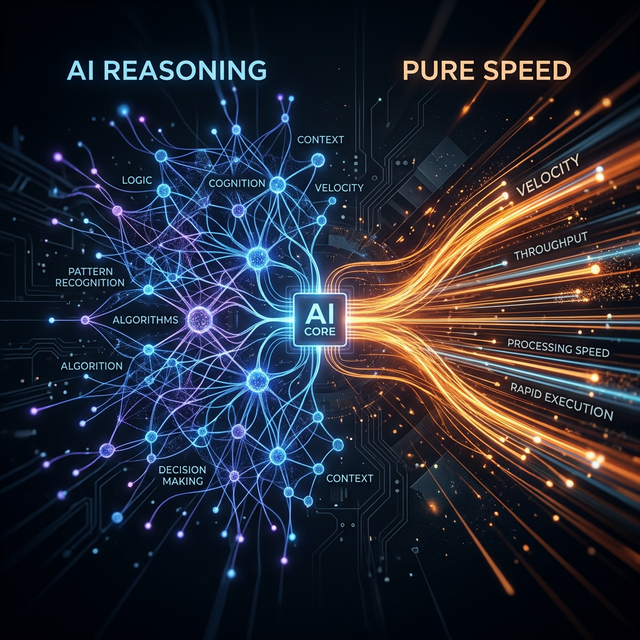
- Precision Control with 'xhigh' Effort: A new 'xhigh' effort level gives developers granular control over the model's reasoning depth and latency.
- Task Budgets (Public Beta): Engineering teams now have more tools to dictate how resources are spent during long-form tasks.
- Enhanced Vision and Updated Tokenizer: Higher-resolution vision processing combined with a refreshed tokenizer creates more efficient and capable multi-modal data processing.
Safety and Cost Efficiency
While the highly restricted "Claude Mythos" remains largely internal to test rigorous safety protocols, Opus 4.7 benefits substantially from this research. The release includes automated safeguards specifically tuned for cybersecurity use cases, highlighting Anthropic's continued focus on enterprise-ready security.
Perhaps most importantly for scaling adoption, Anthropic held the line on pricing. Opus 4.7 remains firmly at $5 per million input tokens and $25 per million output tokens (mirroring Opus 4.6), ensuring businesses can upgrade to superior capabilities without an unexpected spike in operating expenses.


Discussion
0Join the conversation
Sign in with your Google account to participate in the discussion, ask questions, and share your insights.